AI-Driven Operational Automation for Enterprise Data Platforms
Introduction
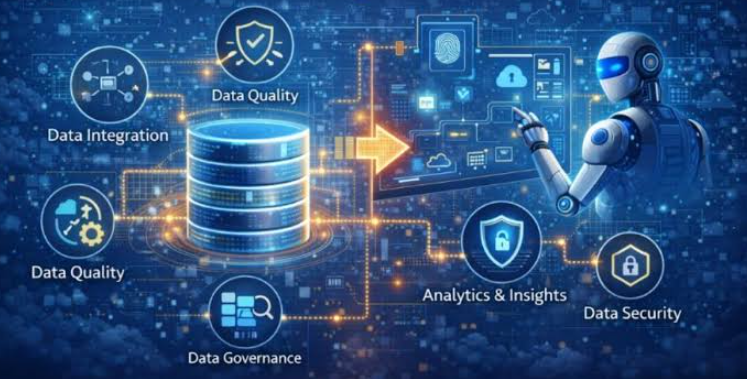
Enterprise data platforms have become the foundation of modern digital organizations. Businesses rely on data platforms to collect, store, process, analyze, and distribute information across departments and applications. As data volumes continue to grow and organizations adopt cloud computing, artificial intelligence, Internet of Things technologies, and digital applications, managing these platforms manually has become increasingly difficult.
AI-driven operational automation offers an approach to this challenge by combining artificial intelligence, machine learning, intelligent workflows, and automated monitoring. Instead of relying entirely on predefined rules and human intervention, AI-enabled systems can observe platform behavior, identify patterns, detect anomalies, predict potential failures, and initiate appropriate actions.
The objective is not simply to automate individual administrative tasks. The broader goal is to create data platforms that can monitor their own operational conditions, respond to changing workloads, and continuously improve their efficiency and reliability.
Enterprise Data Platforms
An enterprise data platform provides the infrastructure required to manage organizational data throughout its lifecycle. It may include databases, data warehouses, data lakes, lakehouses, integration pipelines, analytics systems, cloud storage, and data governance tools.
These environments are often complex because data originates from many sources. Customer applications, enterprise resource planning systems, financial platforms, websites, mobile applications, sensors, and external services can all contribute information.
Managing these environments involves numerous operational activities. Data pipelines must be monitored, storage capacity must be managed, data quality must be checked, security controls must be maintained, and system performance must be evaluated. When these activities are performed manually, organizations can experience delays, inconsistent processes, and increased operational costs.
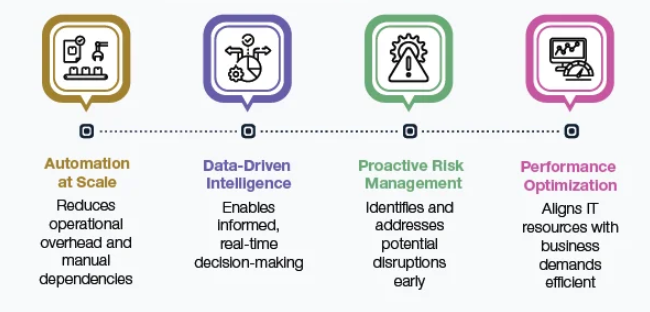
AI-driven automation provides a way to manage these challenges at greater scale.
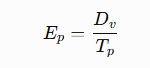
EQ1:Data Processing Efficiency
Role of Artificial Intelligence in Operational Automation
Traditional automation generally depends on predefined rules. For example, a system might generate an alert whenever storage utilization exceeds a specific threshold. While useful, rule-based automation may not recognize more subtle patterns.
AI can analyze historical and real-time operational data to identify relationships and unusual behavior. Machine learning models can learn normal patterns of data-platform activity and identify deviations that may indicate performance problems or failures.
For example, an AI system can analyze pipeline execution times, resource utilization, query behavior, and historical incidents. If the system detects a combination of conditions associated with previous failures, it can generate an early warning or initiate a predefined remediation process.
This transforms automation from simple rule execution into a more adaptive operational capability.
Intelligent Data Pipeline Management
Data pipelines are essential for moving information between source systems and analytical environments. However, pipelines can fail because of network problems, schema changes, missing data, authentication issues, or unexpected increases in data volume.
AI-driven pipeline automation can continuously monitor pipeline behavior. It can identify unusual processing times, detect changes in incoming data, and classify common failure conditions.
Automated systems can also perform selected recovery activities. For instance, a failed pipeline may be restarted automatically when the failure matches a known recoverable condition. More complex incidents can be escalated to data engineers with relevant diagnostic information.
This reduces the time required to identify and resolve routine operational problems.
Predictive Maintenance
One of the important applications of AI-driven automation is predictive maintenance for data infrastructure.
Traditional maintenance often occurs according to fixed schedules or after a system fails. AI-based monitoring can instead analyze historical performance and current system behavior to identify early signs of degradation.
For example, a system can monitor resource consumption, query latency, memory utilization, processing times, and infrastructure events. When patterns indicate a potential problem, automated workflows can increase resources, redistribute workloads, optimize processes, or notify technical teams.
Predictive approaches can therefore help organizations move from reactive maintenance toward proactive operations.
Automated Data Quality Management
Data quality is critical because inaccurate or incomplete information can affect analytics and business decisions. Manual data-quality checks become increasingly difficult as organizations process large and diverse datasets.
AI can assist by identifying anomalies, inconsistencies, duplicates, missing values, and unusual patterns. Machine learning models can learn expected characteristics of datasets and identify records that deviate from those characteristics.
Automation can then classify issues and initiate appropriate workflows. Low-risk problems may be corrected automatically, while uncertain cases can be sent to data stewards for review.
This creates a continuous data-quality monitoring process rather than relying solely on periodic manual inspections.
Intelligent Resource Optimization
Enterprise data platforms frequently experience fluctuating workloads. A system that is sufficient during normal business activity may become overloaded during peak periods.
AI-driven automation can analyze workload patterns and resource utilization to support dynamic resource management. Cloud-based platforms can automatically adjust computing resources according to demand.
For example, an intelligent system may recognize recurring periods of increased analytical workloads and prepare additional resources in advance. When demand decreases, unnecessary resources can be released.
Such automation can improve platform responsiveness while helping organizations manage infrastructure costs.
Security and Anomaly Detection
Security is another important application area. Enterprise data platforms contain valuable information and are therefore potential targets for unauthorized access and malicious activity.
AI-based security systems can analyze access patterns, authentication events, data transfers, and user behavior. Unusual activity can trigger automated alerts or protective actions.
For example, an unexpected access pattern involving a sensitive dataset can be flagged for investigation. Depending on organizational policies, an automated workflow may temporarily restrict access or require additional verification.
However, automated security decisions should be governed carefully. False positives can disrupt legitimate users, while missed anomalies can create security risks. Human oversight remains important for high-impact decisions.
AI-Assisted Data Governance
Data governance ensures that information is managed according to organizational policies and regulatory requirements. AI can support governance by automatically classifying data, identifying sensitive information, monitoring policy compliance, and maintaining metadata.
Natural language processing can assist in understanding descriptions and documentation associated with datasets. AI systems can also identify relationships between datasets and recommend appropriate classifications.
Automating governance activities can reduce administrative workloads and improve visibility across large data environments.
Human-AI Collaboration
AI-driven operational automation does not require complete elimination of human involvement. In many enterprise environments, the most effective approach is collaboration between automated systems and technical professionals.
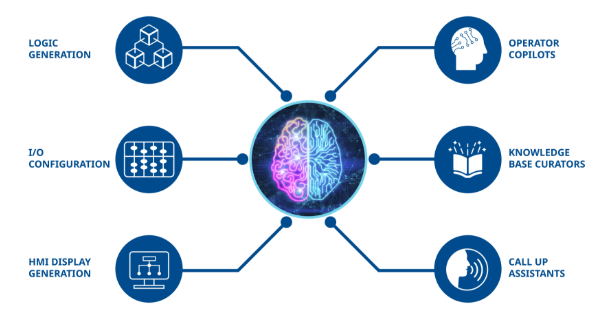
AI can handle continuous monitoring, routine diagnostics, repetitive tasks, and low-risk remediation. Engineers can focus on complex incidents, architecture decisions, security policies, and strategic improvements.
A human-in-the-loop approach is especially important when automated actions could have significant operational or business consequences. Organizations should define which activities can be automated completely and which require human approval.
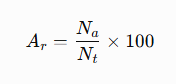
EQ2:AI Automation Rate
Challenges and Considerations
Despite its benefits, AI-driven operational automation introduces several challenges. Data quality is fundamental because AI systems depend on reliable operational information. Poor-quality monitoring data can result in inaccurate recommendations or inappropriate actions.
Model transparency is another concern. Technical teams need to understand why an AI system generated a particular alert or recommendation, particularly when automated decisions affect critical infrastructure.
Security must also be considered throughout the automation lifecycle. Automated systems require access to enterprise resources, making identity management, authorization, auditing, and secure configuration essential.
Organizations should also monitor AI models continuously. Changes in workloads, applications, and data characteristics can reduce model effectiveness over time.
Future of AI-Driven Data Operations
The future of enterprise data operations is likely to involve increasingly intelligent and autonomous platforms. AI agents may coordinate data pipelines, infrastructure resources, quality controls, governance processes, and incident management through integrated workflows.
Instead of simply reporting failures, future systems may diagnose problems, identify potential solutions, simulate their effects, and recommend or execute appropriate actions based on predefined policies.
The development of AI-enabled observability will further strengthen this trend by combining infrastructure metrics, logs, traces, data-quality information, and business indicators into a unified operational view.
Conclusion
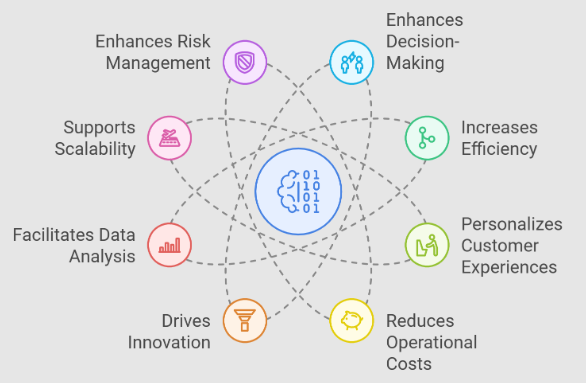
AI-driven operational automation is transforming the management of enterprise data platforms from a largely reactive activity into a more proactive and intelligent process. By applying AI to pipeline monitoring, predictive maintenance, data-quality management, resource optimization, security, and governance, organizations can improve operational efficiency and responsiveness.
However, successful implementation requires more than deploying AI technologies. Organizations need reliable data, clear governance policies, appropriate security controls, continuous monitoring, and effective collaboration between humans and automated systems.
As enterprise data environments continue to expand, AI-driven operational automation can provide the intelligence and scalability required to manage increasingly complex platforms. The combination of automation, analytics, and human expertise can create data infrastructures that are more responsive, resilient, and capable of supporting continuous digital transformation.
Comments
Join the discussionNo comments yet. Be the first to comment.