Autonomous Governance Models for Cloud-Based Enterprise Data Platforms

Introduction
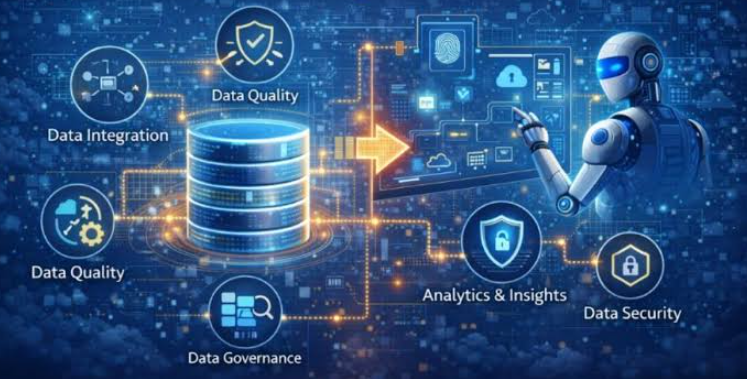
Cloud computing has fundamentally changed the way enterprises create, store, process, and share data. Organizations now operate across cloud data warehouses, data lakes, SaaS applications, distributed databases, and hybrid infrastructure. Although these technologies provide scalability and flexibility, they also create new challenges for managing enterprise data. Traditional governance approaches often depend on manual reviews, static policies, and periodic audits, making them difficult to scale across dynamic cloud environments.
Autonomous governance offers an alternative approach. It uses automation, artificial intelligence, machine learning, metadata management, policy engines, and continuous monitoring to manage data governance activities with limited manual intervention. Instead of treating governance as a periodic administrative task, autonomous models make it a continuous capability embedded within the enterprise data platform.
The goal of autonomous governance is not to eliminate human responsibility. Rather, it is to automate routine governance activities while keeping humans responsible for high-impact decisions, exceptions, and policy development.
Understanding Autonomous Data Governance
Data governance encompasses the policies, standards, processes, technologies, and responsibilities used to ensure that enterprise data is reliable, secure, accessible, compliant, and appropriately used.
In a traditional environment, governance teams may manually identify sensitive datasets, review access permissions, investigate quality problems, and verify compliance. In an autonomous governance model, software continuously performs many of these activities.
For example, an intelligent governance platform can discover a newly created dataset, classify its contents, identify sensitive information, assign metadata, evaluate applicable policies, and recommend access controls. If the system detects a significant risk, it can alert a data steward or security team for further investigation.
Architecture of an Autonomous Governance Model
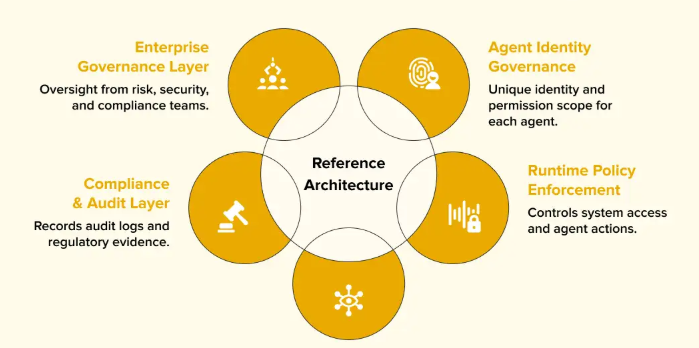
An autonomous governance architecture generally consists of several interconnected layers.
The first layer identifies data across cloud environments. Enterprise information may exist in structured databases, data warehouses, data lakes, files, applications, and streaming systems.
Automated discovery tools scan these environments and maintain inventories of available data assets. Machine learning can assist in identifying the type and sensitivity of information within datasets.
This capability is especially important in cloud environments, where new data resources can be created rapidly and may otherwise remain outside centralized governance processes.
Metadata and Knowledge Layer
Metadata describes the characteristics and context of data. It can include ownership, source, business meaning, sensitivity, lineage, quality status, and usage information.
Autonomous governance platforms can automatically collect metadata from multiple systems and create relationships between datasets. Knowledge graphs can further represent connections among data assets, business processes, users, policies, and applications.
A strong metadata layer allows governance systems to understand not only what data exists but also how it is connected to enterprise operations.
EQ1:Autonomous Governance Effectiveness

Policy and Rules Engine
The policy layer translates organizational governance requirements into enforceable rules. Policies can address data access, retention, classification, privacy, security, sharing, and quality.
A rules engine can automatically evaluate datasets and user activities against these policies. For example, a policy may require sensitive information to be accessible only to authorized roles. When a new dataset is identified as sensitive, the governance system can automatically evaluate whether appropriate access controls are in place.
Policies should be centrally managed but adaptable to different business and regulatory requirements.
Continuous Data Quality Management
Data quality is a central component of autonomous governance. In large cloud platforms, data may be continuously generated and transformed, making periodic quality checks insufficient.
Autonomous systems can monitor data pipelines and identify missing values, duplicates, inconsistencies, unexpected changes, and unusual patterns. Machine learning can help detect anomalies that may not be captured by conventional rules.
When a problem is detected, the platform can notify the responsible data owner or initiate predefined remediation procedures. For low-risk issues, automated correction may be appropriate. More complex problems should be escalated to human experts.
Continuous quality monitoring helps organizations maintain confidence in analytics, reporting, and AI applications that depend on enterprise data.
Automated Security and Access Governance
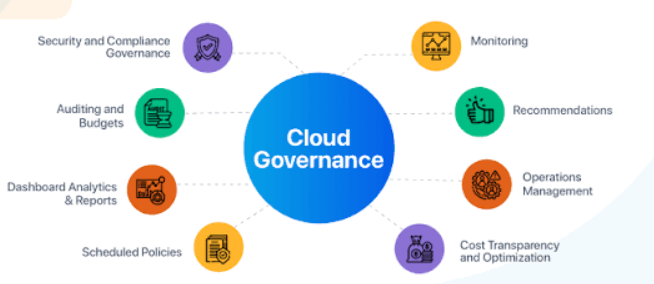
Cloud environments require strong controls over who can access information and how that information is used. Autonomous governance can continuously evaluate access permissions and user behavior.
Intelligent systems can identify excessive permissions, inactive accounts, unusual access patterns, and potentially risky data-sharing activities. Automated workflows can recommend permission changes or trigger predefined protective measures.
However, automated security actions must be carefully designed. Incorrect restrictions can interrupt legitimate business operations, while insufficient controls can expose sensitive information. High-impact security decisions should therefore include appropriate human oversight and clearly defined escalation mechanisms.
Data Lineage and Transparency
Data lineage describes how information moves through an organization, including where it originates, how it is transformed, and where it is ultimately consumed.
Autonomous lineage tools can automatically capture relationships between source systems, transformation pipelines, analytical models, reports, and applications. This is particularly valuable when organizations operate complex cloud architectures.
Accurate lineage helps organizations investigate data-quality problems, understand the impact of system changes, demonstrate compliance, and determine which business processes depend on particular datasets.
Autonomous Compliance Monitoring
Cloud platforms can span multiple geographic regions and organizational units, creating complex compliance requirements. Autonomous governance can continuously monitor data environments against applicable organizational and regulatory controls.
Instead of waiting for periodic audits, organizations can receive alerts when governance requirements are not satisfied. Automated evidence collection can also simplify audit preparation by maintaining records of policies, access activities, data classifications, and governance actions.
Nevertheless, compliance automation should support rather than replace legal and compliance professionals. Regulations can involve contextual requirements that cannot always be interpreted reliably through automated mechanisms.
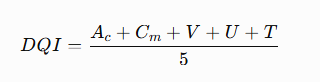
EQ2:Data Quality Index
Human Oversight and Responsible Autonomy
An important principle of autonomous governance is controlled autonomy. Not every governance decision should be automated.
Routine activities, such as metadata extraction, dataset classification, quality monitoring, and policy checks, can often be automated. Decisions involving significant privacy, legal, financial, or operational consequences should generally include human review.
A useful governance model therefore uses different levels of autonomy. Low-risk activities can be fully automated, medium-risk activities can involve automated recommendations with human approval, and high-risk activities can require direct human authorization.
This approach combines the efficiency of automation with organizational accountability.
Benefits of Autonomous Governance
Autonomous governance can provide several benefits to cloud-based enterprises. Continuous monitoring can identify governance problems more quickly than periodic manual reviews. Automation can reduce repetitive workloads for data stewards and compliance teams.
It can also improve consistency by applying governance policies systematically across different cloud environments. Centralized metadata and lineage can improve visibility, while automated classification can help organizations understand their expanding data estates.
Another advantage is scalability. As organizations add new applications, datasets, and cloud services, automated governance mechanisms can extend governance controls without requiring a proportional increase in manual effort.
Challenges
Despite its advantages, autonomous governance introduces significant challenges. Incorrect AI classifications can result in inappropriate access restrictions or missed risks. Poorly designed automation can propagate errors across large numbers of datasets.
Integration is another challenge. Enterprises frequently use multiple cloud providers, legacy systems, databases, and specialized applications. Establishing consistent governance across these environments requires interoperable technologies and standardized policies.
Organizations must also address privacy, cybersecurity, model transparency, accountability, and employee adoption. Governance systems themselves become important enterprise infrastructure and must therefore be protected against unauthorized modification or misuse.
Future of Autonomous Governance
The future of enterprise data governance is likely to involve increasingly intelligent and adaptive platforms. AI agents may continuously monitor data environments, identify emerging risks, recommend policy changes, and assist with remediation.
Governance systems may also become more context-aware. Rather than applying identical controls to every dataset, intelligent platforms could consider data sensitivity, business purpose, user roles, regulatory requirements, and operational risk when recommending governance actions.
Greater integration between data governance, cybersecurity, privacy management, and AI governance is also likely. This convergence can provide organizations with a unified approach to managing information throughout its lifecycle.
Conclusion
Autonomous governance models provide a scalable approach to managing data across modern cloud-based enterprise platforms. By combining automated discovery, metadata management, policy enforcement, data-quality monitoring, security controls, lineage tracking, and compliance monitoring, organizations can make governance more continuous and responsive.
However, autonomy should not mean the removal of human accountability. The most sustainable models combine intelligent automation with clearly defined responsibilities, transparent policies, human oversight, and strong audit mechanisms. As enterprise data environments become increasingly distributed and dynamic, autonomous governance can serve as an important foundation for building secure, trustworthy, and well-managed cloud data ecosystems.
Comments
Join the discussionNo comments yet. Be the first to comment.