Next-Generation Enterprise Transformation Through AI-Driven Data Engineering
Introduction
In the rapidly evolving digital economy, enterprises are under increasing pressure to innovate, improve operational efficiency, enhance customer experiences, and remain competitive. Traditional approaches to data management are often insufficient to meet the demands of modern businesses, where information is generated continuously from diverse sources. Artificial intelligence (AI) and advanced data engineering have emerged as powerful technologies that enable organizations to transform their operations, make intelligent decisions, and develop sustainable business strategies.
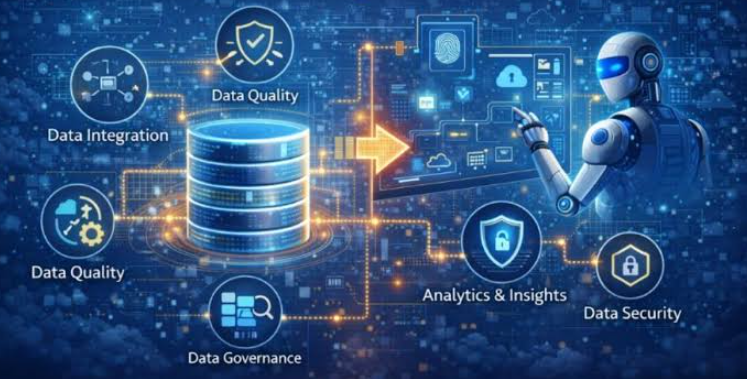
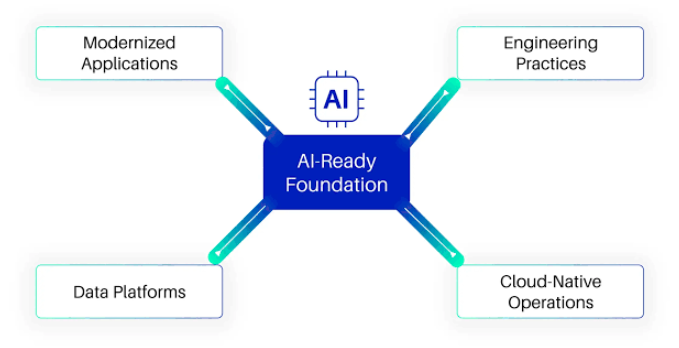
AI-driven data engineering combines data integration, automated data pipelines, cloud computing, machine learning, and intelligent analytics to create reliable and scalable data ecosystems. It enables enterprises to convert raw data into actionable insights while reducing manual effort and improving the speed and accuracy of decision-making. This approach represents a new stage of enterprise transformation in which data infrastructure becomes an intelligent foundation for innovation, adaptability, and long-term growth.
Understanding AI-Driven Data Engineering
Data engineering involves designing, developing, and maintaining systems that collect, process, transform, store, and deliver data for analytical and operational purposes. Traditional data engineering relies heavily on predefined workflows and manually configured processes. Although these methods remain useful, they may struggle to handle rapidly changing data volumes, complex information formats, and evolving business requirements.
AI-driven data engineering enhances these processes by integrating artificial intelligence and machine learning into the data lifecycle. Intelligent systems can automatically identify data quality issues, recommend transformation methods, detect unusual patterns, optimize processing workflows, and monitor pipeline performance.
For example, an enterprise receiving information from customer relationship management systems, financial applications, online transactions, and connected devices can use AI-enabled pipelines to standardize and integrate these datasets. The resulting information becomes more accessible for reporting, predictive analytics, and automated decision-making.
By reducing repetitive engineering tasks and improving data reliability, AI-driven data engineering enables organizations to build more responsive and intelligent digital environments.
EQ1:Data Processing Efficiency

Transforming Enterprise Operations
One of the most significant benefits of AI-driven data engineering is its ability to improve operational efficiency across enterprise functions. Organizations often manage multiple systems that operate independently, creating information silos and delays in decision-making. Integrated data platforms help overcome these limitations by connecting information across departments.
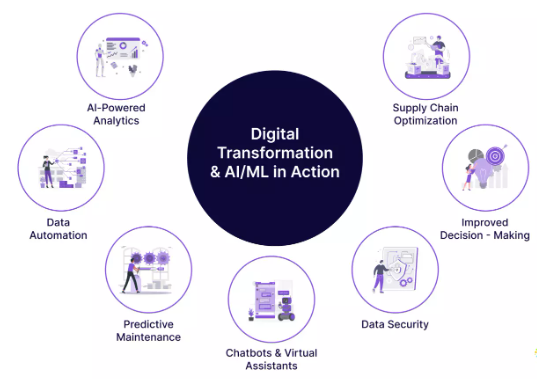
In manufacturing, AI-driven data engineering can integrate sensor readings, production records, maintenance logs, and inventory information. Predictive models can analyze these datasets to identify equipment problems before they cause costly failures. This supports proactive maintenance, reduces downtime, and improves production planning.
In financial services, intelligent data pipelines can consolidate transaction records, customer information, and market data. AI models can then help identify suspicious transactions, assess credit risks, and detect unusual financial activities.
Retail organizations can combine sales histories, customer preferences, inventory records, and market trends to improve demand forecasting and product recommendations. These capabilities reduce inventory imbalances and support more personalized customer experiences.
Through these applications, AI-driven data engineering enables enterprises to move from reactive operations toward predictive and increasingly automated business processes.
Enhancing Data Quality and Governance
Reliable data is essential for successful enterprise transformation. Inaccurate, incomplete, duplicated, or inconsistent information can undermine analytical results and lead to poor business decisions. AI-driven data engineering helps address these problems through automated data validation, anomaly detection, and intelligent monitoring.
Machine learning techniques can identify unusual records, recognize recurring errors, and detect changes in data patterns. Natural language processing can also assist in understanding unstructured information, including customer feedback, business documents, and support conversations.
However, automation alone cannot guarantee data reliability. Enterprises must establish strong data governance frameworks that define data ownership, access permissions, quality standards, retention policies, and accountability.
Responsible AI practices are equally important. Organizations should monitor model performance, document automated decisions, protect sensitive information, and evaluate potential bias. Human oversight remains necessary when decisions have significant financial, legal, or social consequences.
Combining intelligent automation with effective governance helps enterprises establish trusted data environments that support secure and responsible innovation.
The Role of Cloud Computing and Modern Data Architecture
Cloud computing provides the scalability and flexibility required for AI-driven data engineering. Modern enterprises generate large amounts of structured and unstructured data, which may exceed the capabilities of traditional infrastructure. Cloud platforms offer adaptable storage, computing resources, managed data services, and access to advanced AI tools.
Modern architectures, including data lakes, data warehouses, and lakehouse platforms, support different analytical requirements. Data lakes can store diverse information in its original or processed form, while data warehouses provide structured environments for reporting and business intelligence. Lakehouse approaches combine capabilities associated with both models.
Real-time data processing further enables organizations to respond to changing conditions as events occur. For example, logistics companies can analyze vehicle locations, traffic information, and delivery updates to adjust routes and improve service reliability.
Enterprises can also use data orchestration and observability tools to monitor dependencies, identify pipeline failures, and maintain consistent data delivery. When combined with AI-based optimization, these technologies help create resilient, scalable, and efficient data ecosystems.
Nevertheless, organizations must consider cloud costs, vendor dependence, security requirements, and data residency obligations when selecting an architecture.
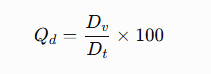
EQ2:Data Quality Assessment
Improving Decision-Making Through Predictive and Generative AI
AI-driven data engineering creates the foundation for advanced analytical capabilities. Predictive analytics uses historical and current information to estimate future outcomes, including customer demand, equipment failures, supply chain disruptions, and financial risks.
Prescriptive analytics extends these capabilities by recommending possible actions based on business objectives and operational constraints. These insights help decision-makers evaluate alternatives and respond more effectively to uncertainty.
Generative AI introduces additional opportunities by enabling users to interact with enterprise information through natural language. Employees can ask questions about sales performance, request summaries of business reports, or explore operational trends without manually navigating complex analytical tools.
However, these systems depend on accurate, well-organized, and appropriately authorized data. Retrieval-augmented generation can connect generative AI systems to approved enterprise information sources, improving the relevance and traceability of responses. Access controls and validation mechanisms remain essential to prevent unauthorized disclosure and misleading outputs.
By combining reliable data engineering with predictive and generative AI, enterprises can make analytical capabilities more accessible across departments and job roles.
Challenges in AI-Driven Enterprise Transformation
Despite its potential, AI-driven data engineering introduces several implementation challenges. Legacy systems may be difficult to integrate with modern platforms, while inconsistent data standards can complicate information sharing. Organizations may also face shortages of skilled professionals who understand data engineering, machine learning, cybersecurity, and business operations.
The costs of infrastructure, model development, system integration, and ongoing maintenance can be substantial. In addition, poorly designed AI systems may introduce bias, expose sensitive information, or produce unreliable recommendations.
Enterprises should address these risks through phased implementation, employee training, clear governance policies, and continuous performance monitoring. Starting with well-defined business problems allows organizations to demonstrate value before expanding AI initiatives across the enterprise.
Cross-functional collaboration between data engineers, business analysts, security specialists, and organizational leaders is also essential. Successful transformation depends not only on technological capabilities but also on organizational culture, leadership support, and employee adoption.
Future Directions
The future of enterprise data engineering will increasingly involve autonomous pipeline management, intelligent data agents, real-time analytics, and AI-assisted software development. These capabilities may allow systems to detect data problems, recommend corrections, optimize workloads, and assist engineers in building and maintaining complex data workflows.
Data products and data mesh principles may also gain importance by encouraging domain teams to manage reliable, reusable datasets while following common governance standards. At the same time, privacy-enhancing technologies and stronger cybersecurity mechanisms will become increasingly important as enterprises expand AI adoption.
Organizations will also need to consider the environmental impact of data centers and AI workloads. Efficient model selection, optimized computing resources, and responsible infrastructure management can help reduce unnecessary energy consumption.
The most successful enterprises will be those that balance innovation with reliability, security, transparency, and measurable business value.
Conclusion
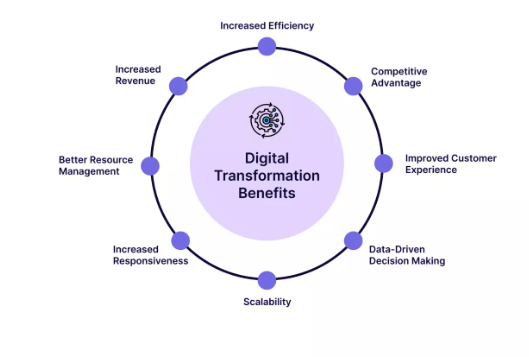
Next-generation enterprise transformation through AI-driven data engineering represents a fundamental shift in how organizations manage information and conduct business. By integrating intelligent automation, modern data architectures, predictive analytics, and generative AI, enterprises can improve operational efficiency, strengthen decision-making, and develop more responsive business models.
However, realizing these benefits requires high-quality data, robust governance, skilled professionals, secure infrastructure, and a clear strategic vision. AI-driven data engineering should not be treated as an isolated technology initiative but as a core component of enterprise development.
Ultimately, organizations that build trustworthy, scalable, and intelligent data ecosystems will be better positioned to adapt to changing market conditions, deliver greater customer value, and achieve sustainable digital growth in an increasingly AI-driven world.
Comments
Join the discussionOn autonomous pipelines: "Excellent overview of the shift toward intelligent data pipelines! When moving toward 'autonomous pipeline management' and self-healing systems, what is the biggest hurdle you've seen enterprises face when deciding whether to actually trust AI to execute fixes without human intervention?"