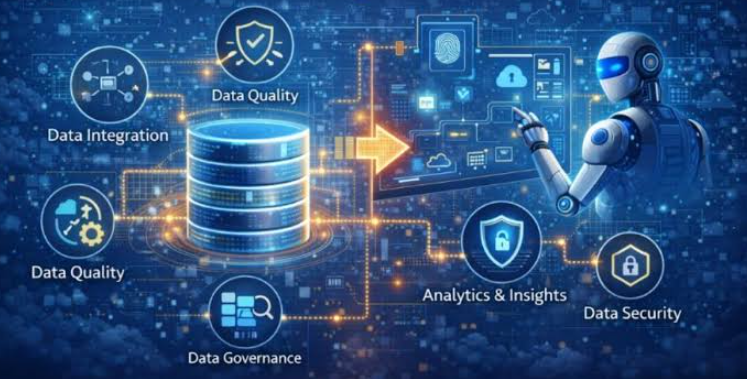
Adaptive Cloud Data Platforms Powered by AI-Based Resource Optimization

Introduction
The rapid growth of digital technologies has fundamentally changed the way organizations collect, process, and utilize data. Enterprises today generate enormous volumes of structured, semi-structured, and unstructured data from business applications, Internet of Things (IoT) devices, social media platforms, customer interactions, and cloud services. Managing these diverse and continuously expanding data sources requires highly scalable, intelligent, and flexible infrastructures. Traditional cloud platforms often rely on predefined resource allocation policies and manual monitoring, which can lead to inefficient resource utilization, increased operational costs, and reduced system performance. To overcome these limitations, organizations are increasingly adopting adaptive cloud data platforms powered by artificial intelligence (AI)-based resource optimization.
Adaptive cloud data platforms integrate cloud computing, AI, machine learning, and automation to dynamically allocate computing resources based on workload characteristics and business priorities. These platforms continuously monitor system performance, predict future resource demands, optimize workload distribution, and automatically adjust computing infrastructure in real time. By combining intelligent decision-making with cloud elasticity, organizations can improve operational efficiency, reduce costs, enhance scalability, and accelerate digital transformation initiatives. AI-driven optimization has become a key enabler for building resilient and intelligent cloud ecosystems capable of supporting modern enterprise applications.
Understanding Adaptive Cloud Data Platforms
Adaptive cloud data platforms are intelligent cloud-based infrastructures capable of automatically responding to changing workloads and business environments. Unlike traditional cloud systems that depend on static resource allocation, adaptive platforms continuously analyze operational conditions and modify resource utilization dynamically.
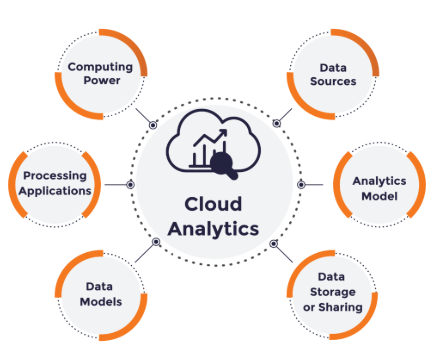
These platforms incorporate distributed computing, containerized applications, serverless architectures, data lakes, cloud warehouses, orchestration frameworks, and AI-driven management systems. Their adaptive capabilities enable them to allocate computational resources efficiently while maintaining high availability, fault tolerance, and optimal performance.
Adaptability extends beyond infrastructure management. Modern cloud platforms also optimize data movement, storage allocation, processing schedules, network traffic, and security policies. This holistic approach ensures that enterprise data pipelines remain responsive to evolving business requirements without requiring constant manual intervention.
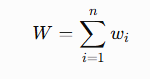
EQ1:Total Cloud Workload
AI-Based Resource Optimization
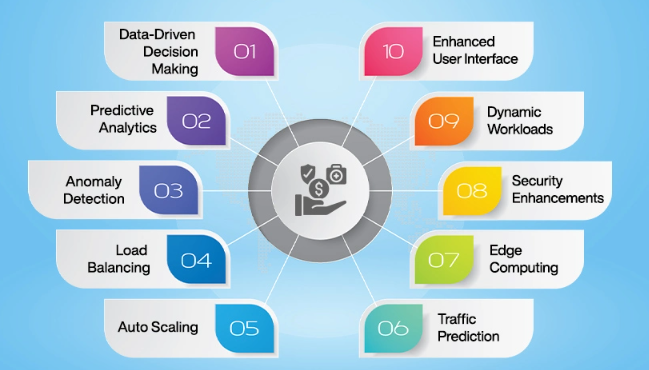
Artificial intelligence plays a central role in optimizing cloud resource utilization. AI algorithms continuously analyze historical performance metrics, current workload conditions, and application behavior to make intelligent resource allocation decisions.
Machine learning models identify usage patterns, forecast future demand, detect performance bottlenecks, and recommend infrastructure adjustments before resource shortages occur. Predictive analytics enables proactive scaling instead of reactive responses, minimizing service interruptions while maintaining consistent application performance.
AI-based optimization also considers multiple operational objectives simultaneously, including minimizing response time, maximizing throughput, reducing operational costs, balancing workloads, and improving energy efficiency. Intelligent decision-making ensures that available cloud resources are utilized effectively while maintaining service-level agreements.
As organizations process increasingly complex workloads, AI continuously learns from system behavior and refines optimization strategies, allowing cloud platforms to become more efficient over time.
Core Components of Adaptive Cloud Data Platforms
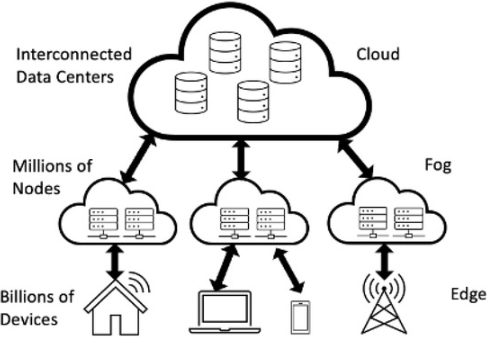
Adaptive cloud data platforms consist of several interconnected technological components that work together to support intelligent resource management.
Cloud-native infrastructure provides scalable computing, storage, and networking capabilities that can expand or contract according to demand. Containerization technologies package applications into lightweight environments that simplify deployment across different cloud environments.
Container orchestration platforms automate application deployment, resource scheduling, scaling, and recovery. These orchestration systems work closely with AI optimization engines to ensure that workloads are distributed efficiently across available computing nodes.
Distributed storage systems manage large volumes of enterprise data while supporting high availability and rapid access. Data lakes, object storage, and cloud warehouses provide unified repositories for analytical and operational workloads.
Real-time monitoring systems continuously collect performance metrics from infrastructure, applications, databases, and networks. AI models analyze this information to identify optimization opportunities and automatically trigger corrective actions.
Automation frameworks coordinate resource provisioning, workload migration, backup operations, and infrastructure updates, reducing manual administrative effort while improving operational consistency.
Intelligent Resource Allocation
Resource allocation represents one of the most important functions of adaptive cloud platforms. Enterprise workloads often fluctuate significantly throughout the day due to changing customer demand, business processes, seasonal activities, and application usage.
AI-driven resource allocation evaluates workload intensity, application priorities, processing deadlines, and infrastructure capacity before assigning computing resources. High-priority applications receive sufficient computational power to maintain performance, while less critical workloads utilize remaining resources efficiently.
Predictive models estimate future demand based on historical trends, enabling cloud platforms to prepare resources before workload increases occur. This proactive approach reduces latency, minimizes service interruptions, and enhances user experience.
Dynamic workload balancing further distributes applications across multiple computing nodes to prevent resource congestion while maximizing infrastructure utilization.
Scalability and Elasticity
One of the defining characteristics of adaptive cloud data platforms is their ability to scale efficiently. Modern enterprises require infrastructures capable of handling rapidly increasing data volumes without compromising performance or reliability.
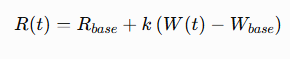
Cloud elasticity allows computing resources to expand automatically during periods of high demand and contract when workloads decrease. AI algorithms determine the optimal timing and scale of resource adjustments by analyzing multiple performance indicators simultaneously.
Horizontal scaling enables organizations to add additional computing instances rather than upgrading individual servers. This distributed approach improves system resilience while supporting continuous business growth.
Adaptive scaling ensures that enterprises only consume the resources they actually need, significantly reducing unnecessary cloud expenses while maintaining high service availability.
Cost Optimization
Cloud infrastructure provides remarkable flexibility but can also result in excessive operational costs if resources are not managed effectively. AI-based optimization addresses this challenge by continuously identifying opportunities to improve cost efficiency.
Machine learning models analyze infrastructure utilization, idle resources, storage consumption, network traffic, and workload scheduling to recommend cost-saving strategies. Automated resource consolidation reduces unnecessary virtual machines and underutilized computing instances.
Intelligent scheduling moves non-critical workloads to periods of lower operational cost while maintaining business objectives. Storage optimization automatically migrates infrequently accessed data to lower-cost storage tiers without affecting accessibility.
Cost prediction models further assist organizations in forecasting cloud expenditure, allowing enterprises to allocate budgets more accurately and avoid unexpected operational expenses.
Security and Governance
Adaptive cloud platforms incorporate intelligent security mechanisms that continuously protect enterprise data and infrastructure. AI-driven security systems monitor network traffic, user activities, authentication events, and system behavior to identify suspicious activities.
Anomaly detection algorithms recognize unusual access patterns, abnormal resource consumption, and potential cyber threats in real time. Automated security responses isolate affected resources, initiate recovery procedures, and notify administrators before incidents escalate.
Data governance frameworks ensure that information remains accurate, secure, and compliant with organizational policies and regulatory requirements. Automated metadata management improves data lineage, classification, and auditing while simplifying compliance reporting.
Identity and access management systems dynamically adjust permissions based on user roles, workload sensitivity, and organizational policies, reducing security risks across distributed cloud environments.
EQ2:Adaptive Resource Scaling
Business Applications
Adaptive cloud data platforms powered by AI-based resource optimization support numerous enterprise applications across multiple industries. Financial institutions utilize intelligent cloud infrastructures for fraud detection, transaction processing, and risk assessment. Healthcare organizations rely on adaptive platforms for electronic health records, medical imaging analysis, and predictive patient care.
Manufacturing companies optimize production systems through predictive maintenance and industrial IoT analytics. Retail businesses enhance customer experiences using personalized recommendation engines and demand forecasting. Telecommunications providers employ AI-optimized cloud infrastructures to manage network traffic and maintain service quality.
Government agencies use adaptive cloud platforms to improve public services, manage large-scale citizen data, and enhance disaster response capabilities. Educational institutions leverage intelligent cloud systems for digital learning environments, research computing, and academic analytics.
Challenges and Future Trends
Despite their significant advantages, adaptive cloud data platforms present several implementation challenges. Organizations must address data privacy concerns, integration with legacy systems, multi-cloud interoperability, vendor dependency, and the shortage of skilled cloud and AI professionals.
Ensuring transparency in AI-driven decision-making remains another important consideration. Organizations require explainable optimization models that allow administrators to understand automated resource allocation decisions.
Future developments will increasingly incorporate generative AI, autonomous cloud management, reinforcement learning, digital twins, self-healing infrastructures, and edge-cloud integration. AI agents capable of independently monitoring, optimizing, and repairing cloud systems will further reduce manual administration while improving operational resilience.
Quantum computing and advanced predictive analytics may also contribute to next-generation cloud optimization strategies capable of solving increasingly complex resource allocation problems.
Conclusion
Adaptive cloud data platforms powered by AI-based resource optimization represent a major advancement in enterprise cloud computing. By combining cloud-native technologies, artificial intelligence, automation, and predictive analytics, these platforms enable organizations to manage computing resources intelligently while supporting scalability, efficiency, and business agility. AI-driven optimization improves workload distribution, reduces operational costs, strengthens security, and enhances system reliability without requiring extensive manual intervention. As digital transformation continues to accelerate, adaptive cloud platforms will become essential foundations for intelligent enterprises seeking to maximize the value of their data while maintaining sustainable, high-performance cloud infrastructures in an increasingly competitive digital economy.
Comments
Join the discussionNo comments yet. Be the first to comment.