Autonomous Control Planes for Streaming Data Platforms

Streaming data platforms have become the backbone of modern digital systems, enabling organizations to process and react to continuous flows of information in real time. From financial transactions and IoT telemetry to user interactions and operational logs, data streams power critical decisions and automated actions. However, as these systems scale in complexity, managing them manually becomes increasingly impractical. Autonomous control planes are emerging as a powerful solution, introducing intelligence, adaptability, and self-management into streaming data platforms.
Understanding the Control Plane in Streaming Systems
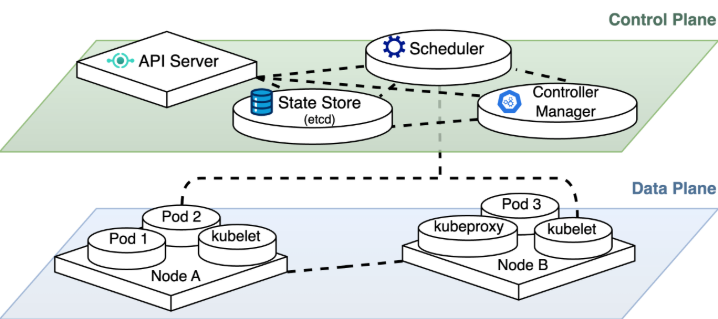
In any distributed system, the control plane is responsible for orchestration, configuration, and governance. It determines how data flows through the system, how resources are allocated, and how policies are enforced. In streaming platforms, the control plane oversees tasks such as pipeline deployment, scaling decisions, fault management, and performance optimization.
Traditionally, control planes rely on static rules and human intervention. Engineers configure thresholds, define workflows, and respond to incidents manually. While this approach works for smaller systems, it becomes inefficient and error-prone at scale. The dynamic nature of streaming data—characterized by fluctuating workloads and evolving data schemas—demands a more adaptive approach.
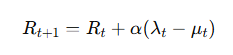
EQ1:Feedback Control Loop

The Shift Toward Autonomy
Autonomous control planes extend traditional control mechanisms by embedding intelligence into the system. They leverage machine learning, generative AI, and policy-driven automation to make decisions without human intervention. Instead of reacting to predefined rules, these systems continuously learn from operational data and adjust their behavior in real time.
This shift mirrors the broader trend toward self-managing systems in cloud computing. Just as autonomous vehicles navigate complex environments with minimal human input, autonomous control planes navigate the complexities of streaming data ecosystems. They monitor system health, predict potential issues, and take proactive actions to maintain optimal performance.
Key Capabilities of Autonomous Control Planes
One of the defining features of autonomous control planes is their ability to perform continuous monitoring and analysis. They collect telemetry data from across the platform, including metrics related to throughput, latency, error rates, and resource utilization. By analyzing these signals, the system gains a holistic understanding of its operational state.
Another critical capability is intelligent decision-making. Autonomous control planes use predictive models to anticipate changes in workload and system behavior. For example, if a surge in data volume is expected, the system can proactively scale resources to handle the increased load. This prevents bottlenecks and ensures consistent performance.
Self-healing is also a cornerstone of autonomy. When failures occur—such as node crashes, network disruptions, or data inconsistencies—the control plane can automatically detect the issue, identify its root cause, and initiate corrective actions. This reduces downtime and minimizes the need for manual intervention.
Policy-driven governance further enhances the system’s capabilities. Organizations can define high-level policies related to security, compliance, and data quality. The autonomous control plane interprets these policies and enforces them dynamically, ensuring that the system operates within defined constraints while adapting to changing conditions.
Architecture of Autonomous Control Planes
The architecture of an autonomous control plane typically consists of several interconnected components. At the foundation is the telemetry layer, which collects real-time data from the streaming platform. This includes metrics, logs, and traces that provide visibility into system behavior.
Above this layer is the intelligence engine, which processes telemetry data using machine learning and AI models. This engine identifies patterns, detects anomalies, and generates insights that inform decision-making. It may also simulate different scenarios to evaluate potential actions before implementing them.
The decision layer translates insights into actions. It determines how to adjust system configurations, allocate resources, or modify data flows. This layer often incorporates reinforcement learning or optimization techniques to continuously improve decision quality.
Finally, the execution layer implements the decisions by interacting with the underlying infrastructure. It may trigger scaling operations, redeploy pipelines, or update configurations. Feedback from these actions is fed back into the system, creating a continuous learning loop.
EQ2:Auto-Scaling Policy
Benefits for Streaming Data Platforms
The adoption of autonomous control planes offers several significant benefits. First and foremost is improved scalability. As data volumes grow, the system can automatically adjust to handle increased demand without requiring manual intervention. This ensures that performance remains consistent նույնիսկ under heavy workloads.
Reliability is another key advantage. By detecting and resolving issues proactively, autonomous systems reduce downtime and improve overall system stability. This is particularly important for applications that rely on real-time data, where even brief interruptions can have significant consequences.
Operational efficiency is also greatly enhanced. Automation reduces the need for manual configuration and troubleshooting, allowing engineers to focus on higher-value tasks. This not only lowers operational costs but also accelerates innovation.
Additionally, autonomous control planes enable better resource utilization. By dynamically allocating resources based on actual demand, the system avoids over-provisioning and reduces waste. This is especially valuable in cloud environments, where costs are directly tied to resource usage.
Challenges and Considerations
Despite their advantages, autonomous control planes introduce new challenges. One of the primary concerns is trust. Organizations must be confident that the system will make correct decisions, especially in critical scenarios. This requires robust validation, testing, and monitoring of AI models.
Transparency is another important consideration. Autonomous systems can sometimes behave in ways that are difficult to interpret. Providing explainability—clear insights into why certain decisions were made—is essential for building trust and ensuring accountability.
Data quality also plays a crucial role. Since autonomous control planes rely on telemetry data for decision-making, inaccuracies or inconsistencies in this data can lead to suboptimal outcomes. Ensuring high-quality data inputs is therefore critical.
Security and compliance must also be addressed. Autonomous systems must adhere to strict policies and protect sensitive data. This requires integrating security measures directly into the control plane and continuously monitoring for potential threats.
Future Directions
The future of autonomous control planes is closely tied to advancements in AI and distributed systems. As machine learning models become more sophisticated, control planes will gain deeper insights and make more nuanced decisions. Generative AI, in particular, has the potential to enhance scenario simulation and automated configuration generation.
Another emerging trend is the integration of multi-agent systems. Instead of a single centralized control plane, multiple autonomous agents can collaborate to manage different aspects of the platform. This distributed approach can improve scalability and resilience.
Edge computing is also influencing the evolution of control planes. As data processing moves closer to the source, control mechanisms must extend beyond centralized cloud environments. Autonomous control planes will need to manage distributed resources across edge and cloud seamlessly.
Conclusion
Autonomous control planes represent a significant advancement in the management of streaming data platforms. By combining real-time monitoring, intelligent decision-making, and automated execution, they enable systems to operate with minimal human intervention. This not only improves scalability and reliability but also enhances efficiency and reduces operational complexity.
As organizations continue to embrace real-time data processing, the need for intelligent, self-managing systems will only grow. Autonomous control planes provide a foundation for this future, transforming streaming platforms into adaptive, resilient, and truly autonomous ecosystems.
Comments
Join the discussionNo comments yet. Be the first to comment.