Autonomous Data Engineering Ecosystems Driven by Agentic AI

As enterprises increasingly depend on data-driven intelligence, the complexity and scale of data engineering systems continue to grow. Traditional data engineering approaches rely heavily on manual configuration, static workflows, and centralized control, which struggle to adapt to dynamic data sources, real-time processing requirements, and evolving governance constraints. Agentic AI introduces a transformative paradigm by enabling autonomous, goal-directed agents to manage, optimize, and govern data engineering processes end to end. This article explores the concept of autonomous data engineering ecosystems driven by agentic AI, examining their architectural foundations, operational mechanisms, governance integration, and strategic role in enabling continuous digital transformation.
1. Introduction
Data engineering forms the backbone of modern analytics, artificial intelligence, and digital services. It encompasses the ingestion, transformation, storage, and delivery of data across diverse platforms and stakeholders. As organizations adopt cloud-native architectures, real-time streaming, and Internet of Things systems, data engineering environments have evolved into highly distributed and continuously changing ecosystems.
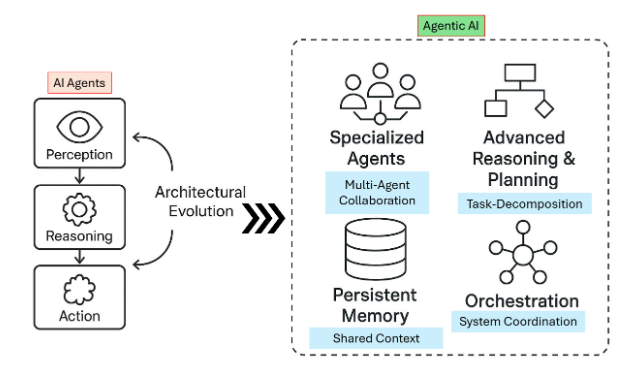
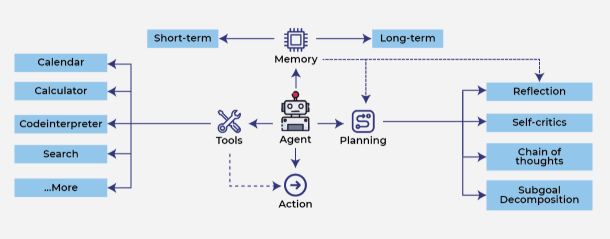
Conventional data engineering practices are increasingly inadequate in this context. Pipelines are often brittle, reactive, and labor-intensive to maintain. Even minor changes in data sources, schemas, or workloads can trigger cascading failures or require costly reengineering efforts. To address these challenges, there is growing interest in autonomous systems that can manage complexity and change with minimal human intervention. Agentic AI, characterized by autonomous agents capable of perception, reasoning, and action, provides a powerful foundation for building such systems.
EQ1:Autonomous Data Engineering Ecosystem Model

2. From Pipelines to Ecosystems
Traditional data engineering is typically pipeline-centric, focusing on linear flows from source to destination. While effective for isolated use cases, this model does not reflect the interconnected nature of modern data environments. Data products, analytics workloads, governance controls, and operational systems interact continuously, forming a complex ecosystem rather than a simple pipeline.
An autonomous data engineering ecosystem embraces this complexity by treating data infrastructure as a living system composed of interacting components. Agentic AI enables this shift by decentralizing control and embedding intelligence across the ecosystem. Instead of relying on a single orchestration layer, multiple agents collaborate to manage ingestion, processing, quality assurance, optimization, and compliance in a coordinated yet flexible manner.
3. Agentic AI as the Core Enabler
Agentic AI systems consist of autonomous agents designed to pursue specific goals within defined constraints. In data engineering ecosystems, agents can be specialized according to functional responsibilities. Ingestion agents manage data connectivity and arrival patterns. Transformation agents adapt processing logic to schema changes or data quality issues. Optimization agents continuously tune performance and cost. Governance agents enforce security, privacy, and compliance policies in real time.
These agents operate based on local observations and shared contextual knowledge, allowing them to make decisions independently while aligning with global system objectives. This distributed intelligence enables the ecosystem to respond dynamically to changes, such as sudden workload spikes, new data sources, or evolving regulatory requirements, without centralized bottlenecks.
4. Autonomous Operations and Self-Management
A defining characteristic of agentic data engineering ecosystems is autonomous operation. Agents continuously monitor system health, performance metrics, and data characteristics. When anomalies or inefficiencies are detected, agents initiate corrective actions proactively rather than waiting for human intervention.
For example, if data latency increases due to resource contention, optimization agents can adjust execution strategies or trigger dynamic scaling in the cloud. If schema drift is detected, transformation agents can generate compatible mappings or alert downstream consumers. Over time, agents learn from operational outcomes, improving their decision-making capabilities and enabling self-management across the data lifecycle.
This autonomy significantly reduces operational overhead and increases system resilience, particularly in large-scale and real-time environments.
5. Embedded Governance and Trust
Governance is a critical requirement for enterprise data systems, especially in regulated industries. Traditional governance models often rely on external audits or periodic reviews, which are poorly suited to continuous data flows. Autonomous data engineering ecosystems embed governance directly into system behavior through dedicated governance agents.
These agents enforce policies related to data access, privacy, lineage, and retention as data moves through the ecosystem. When potential violations are detected, governance agents can take immediate action, such as masking sensitive attributes or blocking unauthorized access. By integrating governance into the operational fabric, the ecosystem ensures compliance without sacrificing agility.
Transparency and explainability are also essential. Agentic systems must provide traceability for decisions and actions, enabling stakeholders to understand and trust autonomous behavior.
6. Continuous Adaptation and Learning
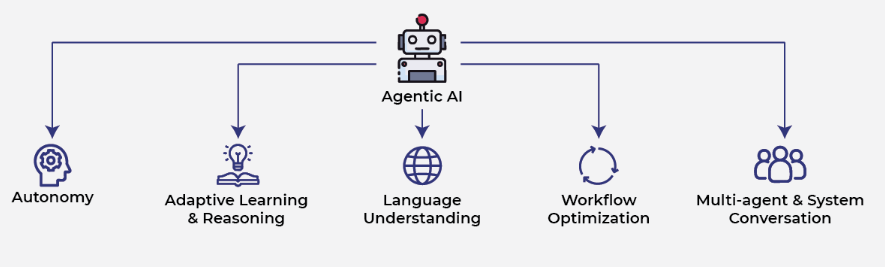
Autonomous data engineering ecosystems are inherently adaptive. Agents continuously learn from historical data, system feedback, and evolving objectives. This learning enables incremental improvement and long-term optimization. As business priorities shift or new technologies emerge, agents can incorporate new knowledge and adjust system behavior accordingly.
Continuous adaptation supports experimentation and innovation. New data products or analytics use cases can be introduced with minimal manual effort, as agents automatically provision and integrate required components. This capability accelerates time-to-value and supports continuous digital transformation.
7. Organizational and Strategic Implications
The adoption of autonomous data engineering ecosystems has profound implications for organizations. Data teams can move away from low-level operational tasks and focus on higher-level design, governance, and strategic alignment. The role of data engineers evolves from pipeline builders to ecosystem architects and supervisors of intelligent systems.
From a strategic perspective, autonomous ecosystems enable organizations to respond more effectively to market changes and technological disruption. Data infrastructure becomes a competitive asset that evolves alongside business needs rather than a constraint that limits innovation.
EQ2:Multi-Agent Coordination Objective

8. Challenges and Research Directions
Despite their promise, agentic data engineering ecosystems present several challenges. Designing effective agent behaviors and coordination mechanisms is non-trivial, particularly in complex environments with competing objectives. Ensuring robustness, security, and ethical behavior in autonomous systems remains an active area of research.
Interoperability across heterogeneous platforms, integration with legacy systems, and standardization of agent frameworks are additional challenges. Human oversight and governance structures must be carefully designed to balance autonomy with accountability.
Future research is likely to explore hybrid models that combine agentic autonomy with human-in-the-loop controls, as well as advanced learning techniques that improve agent collaboration and system-level optimization.
9. Conclusion
Autonomous data engineering ecosystems driven by agentic AI represent a significant evolution in how data infrastructure is designed and operated. By embedding intelligence, autonomy, and governance throughout the data lifecycle, these ecosystems address the limitations of traditional pipeline-centric approaches. They enable continuous adaptation, operational resilience, and sustained digital transformation in increasingly complex data environments. As agentic AI technologies mature, autonomous data engineering ecosystems are poised to become a foundational capability for AI-driven enterprises.
Comments
Join the discussionNo comments yet. Be the first to comment.