Autonomous Governance-as-Code for Cloud Data Engineering Platforms

Introduction
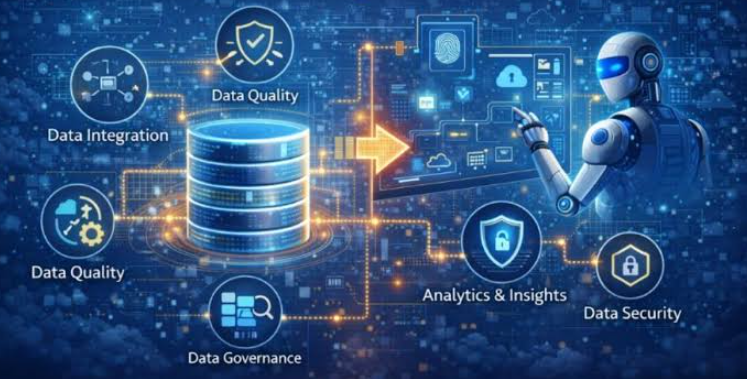
As organizations increasingly rely on cloud-based data engineering platforms, the need for robust governance has become critical. Data governance ensures that data is secure, compliant, high-quality, and accessible to the right stakeholders. However, traditional governance approaches are often manual, policy-heavy, and difficult to scale in dynamic cloud environments. Autonomous Governance-as-Code (GaC) emerges as a transformative paradigm that embeds governance policies directly into code, enabling automated, intelligent, and continuous enforcement across data pipelines.
This approach combines principles from DevOps, DataOps, and artificial intelligence to create self-regulating systems that can adapt to changing requirements while maintaining compliance and operational efficiency.
Understanding Governance-as-Code
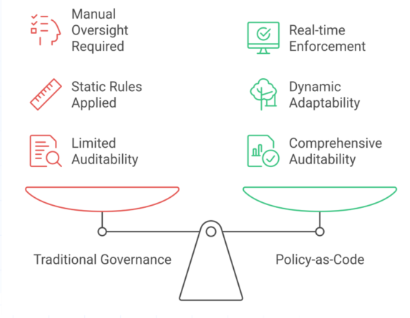
Governance-as-Code extends the concept of Infrastructure-as-Code (IaC) by codifying governance rules, policies, and standards into machine-readable and executable formats. Instead of relying on static documentation or manual audits, policies are embedded within the data engineering lifecycle.
These policies can define access controls, data quality rules, compliance requirements, and lineage tracking. By integrating governance into code, organizations ensure that every data operation adheres to predefined standards automatically.
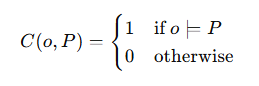
EQ1:Policy Compliance Function
The Need for Autonomy in Governance
Cloud data platforms are highly dynamic, with continuous data ingestion, transformation, and consumption. Manual governance mechanisms cannot keep up with the scale and speed of these environments. Autonomous governance introduces intelligence into policy enforcement, enabling systems to monitor, evaluate, and act without human intervention.
Autonomy is achieved through AI-driven agents that can interpret policies, detect violations, and execute corrective actions in real time. This reduces the risk of non-compliance and enhances system resilience.
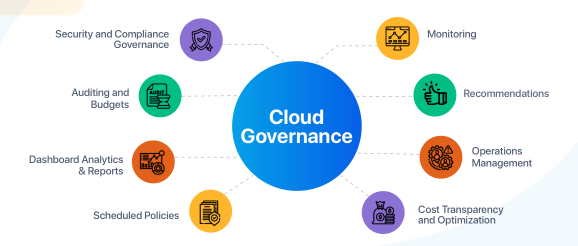
Core Components of Autonomous Governance-as-Code
Policy Definition Layer
This layer allows organizations to define governance rules in declarative formats such as YAML or JSON. Policies may include data access restrictions, encryption requirements, retention policies, and quality thresholds.
Policy Engine
The policy engine interprets and enforces governance rules. It evaluates data operations against defined policies and determines whether they comply. Modern policy engines can leverage AI to handle complex and evolving rules.
Monitoring and Observability Layer
This component continuously tracks data flows, system performance, and policy compliance. It collects metrics and logs that provide visibility into governance activities.
Autonomous Agents
AI-driven agents act as the execution layer of governance. They analyze monitoring data, detect anomalies or violations, and take corrective actions such as blocking unauthorized access, triggering alerts, or modifying workflows.
Feedback and Learning Loop
Autonomous governance systems incorporate feedback mechanisms that allow them to learn from past decisions. This enables continuous improvement and adaptation to new scenarios.
Key Features of Autonomous Governance-as-Code
Continuous Compliance
Policies are enforced in real time, ensuring that data operations remain compliant with regulations and organizational standards at all times.
Self-Healing Systems
When violations occur, autonomous agents can automatically remediate issues without human intervention. For example, if a dataset violates quality thresholds, the system can trigger reprocessing or quarantine the data.
Scalability
Governance policies can be applied consistently across distributed cloud environments, supporting large-scale data operations.
Version Control and Auditing
Since policies are defined as code, they can be versioned, tracked, and audited using standard software development tools. This enhances transparency and accountability.
Integration with Cloud Data Engineering Platforms
Autonomous Governance-as-Code integrates seamlessly with modern cloud data engineering ecosystems. It works alongside technologies such as data lakes, data warehouses, and streaming platforms.
In cloud-native environments, governance policies can be embedded into CI/CD pipelines, ensuring that data workflows are validated before deployment. Containerization and orchestration tools enable dynamic scaling and deployment of governance components.
Streaming platforms benefit significantly from real-time governance, as policies can be enforced on data in motion, preventing issues before they propagate downstream.
Use Cases
Regulatory Compliance
Organizations operating in regulated industries such as finance and healthcare must adhere to strict data governance standards. Autonomous GaC ensures continuous compliance with regulations such as GDPR, HIPAA, and others.
Data Quality Management
Governance policies can define quality rules that ensure data accuracy, completeness, and consistency. Autonomous systems can detect and correct quality issues in real time.
Access Control and Security
Policies governing data access can be enforced automatically, ensuring that only authorized users and systems can access sensitive data.
Data Lineage and Auditability
Autonomous governance systems track data lineage, providing a clear view of how data flows through the system. This is essential for auditing and troubleshooting.
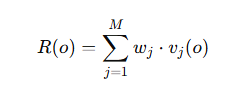
EQ2:Risk Scoring Function
Benefits
Reduced Operational Overhead
Automation of governance tasks reduces the need for manual intervention, freeing up resources for more strategic activities.
Improved Reliability
Continuous monitoring and autonomous remediation enhance system reliability and reduce downtime.
Faster Innovation
By embedding governance into code, organizations can accelerate development cycles without compromising compliance.
Enhanced Trust
Transparent and consistent governance builds trust among stakeholders, including customers, regulators, and internal teams.
Challenges
Complexity of Implementation
Designing and deploying autonomous governance systems requires expertise in cloud computing, data engineering, and AI.
Policy Conflicts
Conflicting policies can create ambiguity and require sophisticated resolution mechanisms.
Security Risks
While governance systems enhance security, they also introduce new attack surfaces that must be protected.
Change Management
Transitioning from traditional governance to an autonomous model requires cultural and organizational changes.
Future Directions
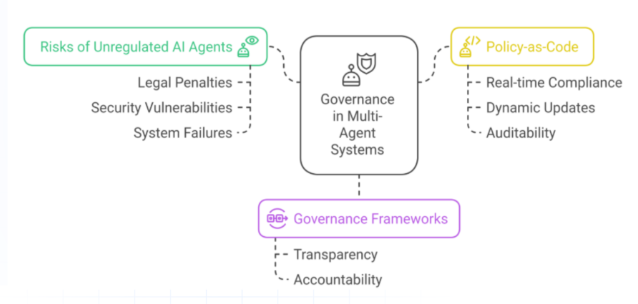
The future of Autonomous Governance-as-Code lies in deeper integration with generative AI and agentic systems. Generative AI can assist in creating and optimizing governance policies, while multi-agent systems can coordinate governance across complex environments.
Another emerging trend is the use of explainable AI to improve transparency in decision-making. This will help organizations understand how governance decisions are made and build greater trust in autonomous systems.
Additionally, the integration of edge computing will enable governance policies to be enforced closer to data sources, reducing latency and improving efficiency.
Conclusion
Autonomous Governance-as-Code represents a significant advancement in managing cloud data engineering platforms. By combining automation, intelligence, and code-driven policies, it addresses the limitations of traditional governance approaches. This paradigm enables organizations to achieve continuous compliance, improve data quality, and enhance operational efficiency in dynamic cloud environments.
As data ecosystems continue to grow in complexity, the adoption of autonomous governance will become essential for organizations seeking to maintain control, ensure compliance, and unlock the full potential of their data assets.
Comments
Join the discussionNo comments yet. Be the first to comment.