Cognitive Governance Models for AI-Native Data Engineering Systems

The rapid growth of artificial intelligence has transformed traditional data engineering into a far more autonomous and adaptive discipline. Modern organizations no longer rely solely on static pipelines and manually governed workflows. Instead, they increasingly deploy AI-native data engineering systems capable of learning, reasoning, automating decisions, and optimizing operations in real time. While these intelligent systems improve scalability and efficiency, they also introduce challenges related to accountability, transparency, trust, ethics, and control. To address these concerns, cognitive governance models have emerged as an essential framework for managing AI-native data ecosystems.
Cognitive governance refers to the use of intelligent, adaptive, and context-aware governance mechanisms that oversee AI-driven data operations. Unlike conventional governance frameworks, which depend heavily on predefined rules and manual audits, cognitive governance models continuously learn from system behavior, organizational objectives, regulatory requirements, and environmental changes. These models combine machine intelligence, policy automation, and human oversight to ensure that AI-native systems remain reliable, ethical, secure, and aligned with business goals.
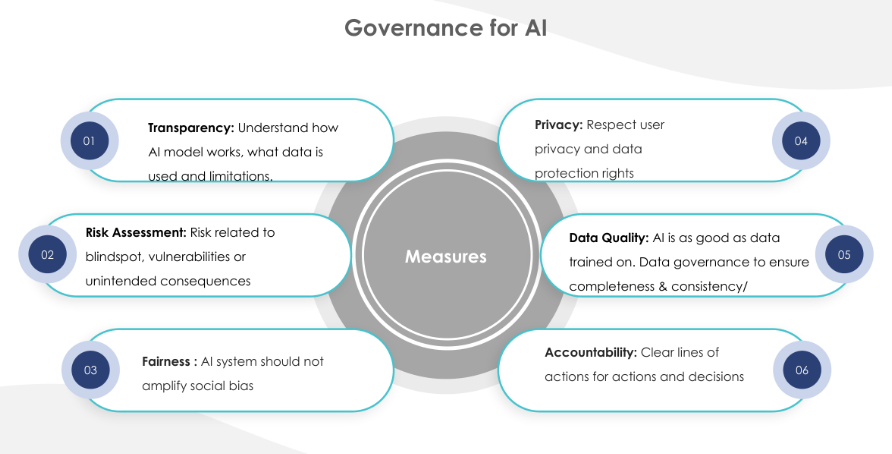
AI-native data engineering systems differ significantly from traditional architectures. Conventional systems are designed around structured workflows where engineers manually define extraction, transformation, and loading processes. In contrast, AI-native environments use machine learning algorithms, autonomous orchestration tools, self-healing pipelines, and predictive optimization mechanisms. Such systems can identify anomalies, adjust data flows dynamically, infer schema changes, and automate operational decisions with minimal human intervention. As a result, governance must also evolve from static supervision to adaptive intelligence.
One of the core principles of cognitive governance is contextual awareness. AI-native systems operate across highly dynamic environments where data sources, regulatory policies, and operational objectives frequently change. A cognitive governance framework continuously monitors these conditions and adjusts governance policies accordingly. For example, if sensitive customer data is transferred across geographic boundaries, the governance system can automatically enforce regional privacy laws, restrict unauthorized access, and trigger compliance verification processes. This real-time adaptability reduces operational risks while maintaining regulatory alignment.
EQ1 : Governance Effectiveness Function

Another important component is explainability and transparency. AI-native systems often rely on complex algorithms that can make decisions without easily interpretable reasoning. In critical sectors such as healthcare, banking, and public administration, opaque AI decisions may create trust deficits and legal complications. Cognitive governance models address this issue by integrating explainable AI techniques into data engineering workflows. These mechanisms provide visibility into how decisions are made, which datasets influenced outcomes, and what factors triggered automated actions. Transparent governance improves stakeholder trust and enables organizations to justify AI-driven decisions during audits or investigations.
Human-AI collaboration is another defining characteristic of cognitive governance. Fully autonomous systems may improve efficiency, but excessive automation can create governance blind spots. Effective governance frameworks therefore establish a balanced relationship between machine intelligence and human oversight. In this hybrid model, AI handles repetitive monitoring, anomaly detection, and policy enforcement, while human experts supervise strategic decisions, ethical evaluations, and exception management. This collaborative approach ensures that organizations retain accountability even when systems operate autonomously.
Risk management also plays a central role in cognitive governance models. AI-native data engineering systems face risks such as biased decision-making, data drift, adversarial attacks, unauthorized data access, and model degradation. Traditional governance frameworks are often too slow to detect and mitigate these evolving threats. Cognitive governance introduces proactive risk intelligence through continuous monitoring and predictive analytics. By identifying unusual behaviors, governance systems can detect vulnerabilities before they escalate into major failures. For instance, if a machine learning pipeline begins generating inconsistent outputs due to corrupted training data, the governance layer can automatically quarantine the affected datasets, alert administrators, and initiate remediation workflows.
Ethical governance is equally important in AI-native environments. AI systems increasingly influence hiring decisions, credit approvals, medical diagnoses, and law enforcement operations. Without ethical oversight, these systems may reinforce discrimination, amplify social inequalities, or violate privacy rights. Cognitive governance frameworks integrate ethical principles directly into data engineering pipelines. Bias detection algorithms, fairness evaluation mechanisms, and accountability protocols help ensure that AI systems operate responsibly. Ethical governance is no longer an optional consideration but a strategic necessity for organizations seeking long-term sustainability and public trust.
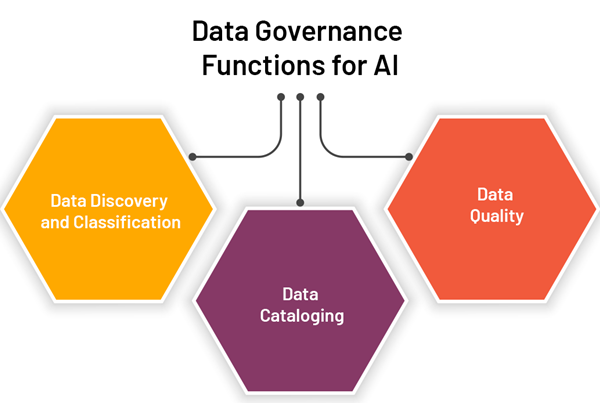
Data lineage and provenance tracking are also essential aspects of governance in AI-native systems. Modern data ecosystems involve continuous transformations across distributed environments, making it difficult to trace the origin and evolution of data assets. Cognitive governance models use intelligent metadata management and automated lineage tracking to maintain visibility across the entire data lifecycle. This capability allows organizations to identify where data originated, how it was processed, and which models consumed it. Such transparency supports compliance, improves debugging efficiency, and strengthens trust in analytical outcomes.
Automation is another transformative feature of cognitive governance. Traditional governance processes often involve manual approvals, periodic audits, and static compliance checks. In fast-moving AI environments, manual governance becomes inefficient and error-prone. Cognitive governance introduces policy-as-code mechanisms where governance rules are embedded directly into pipelines and orchestration systems. Automated agents can validate data quality, enforce security standards, monitor compliance requirements, and optimize resource allocation in real time. This shift from reactive governance to intelligent automation significantly enhances operational resilience.
Scalability represents an additional challenge addressed by cognitive governance models. AI-native systems process massive volumes of structured and unstructured data from cloud platforms, edge devices, IoT networks, and real-time streaming services. Managing governance at such scale requires distributed intelligence rather than centralized control. Cognitive governance frameworks leverage decentralized architectures and federated governance models to maintain consistency across diverse environments. This enables organizations to govern data efficiently without creating performance bottlenecks.
The role of cloud computing and distributed infrastructure further strengthens the need for cognitive governance. As organizations adopt multi-cloud and hybrid-cloud strategies, governance complexity increases substantially. Data may move across multiple providers, jurisdictions, and security domains. Cognitive governance systems use intelligent orchestration and policy harmonization to maintain consistent governance standards across these distributed ecosystems. They also enable dynamic compliance adaptation as regulatory requirements evolve across regions and industries.
EQ2: AI Trust Score Model
Despite its advantages, implementing cognitive governance presents several challenges. One major obstacle is the integration of governance mechanisms into legacy infrastructures. Many organizations still operate fragmented systems with inconsistent data standards and outdated governance practices. Transitioning to AI-native governance requires significant investment in modernization, interoperability, and organizational change management. Additionally, excessive automation may create overreliance on AI systems, reducing human situational awareness and increasing vulnerability during unexpected failures.
Another challenge involves balancing innovation with regulation. Strict governance controls may slow experimentation and reduce agility, while insufficient oversight can expose organizations to ethical and legal risks. Effective cognitive governance therefore requires adaptive policy frameworks that encourage innovation while maintaining accountability. Organizations must also invest in governance literacy, ensuring that engineers, executives, and policymakers understand the implications of AI-driven decision-making.
Looking ahead, cognitive governance models are likely to become foundational components of next-generation digital enterprises. Advances in generative AI, autonomous agents, and self-optimizing infrastructures will further increase the complexity of data ecosystems. Governance systems themselves may evolve into intelligent agents capable of negotiating policies, resolving conflicts, and coordinating compliance activities autonomously. Emerging technologies such as blockchain, federated learning, and digital twins may also enhance governance transparency and trustworthiness.
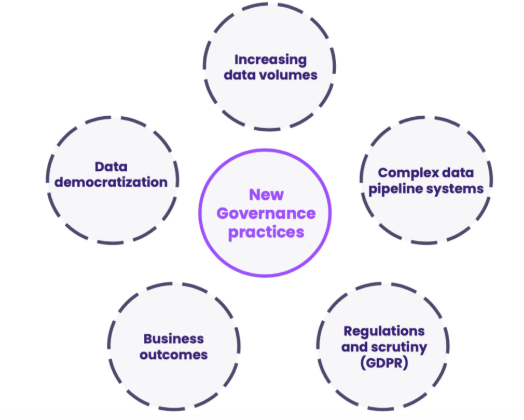
In conclusion, cognitive governance models represent a critical evolution in the management of AI-native data engineering systems. As organizations embrace intelligent automation and autonomous data operations, traditional governance approaches are no longer sufficient. Cognitive governance introduces adaptive intelligence, transparency, ethical oversight, predictive risk management, and human-AI collaboration into the governance process. By combining automation with accountability, these models enable organizations to build trustworthy, scalable, and resilient AI ecosystems. In the future, the success of AI-native enterprises will depend not only on the sophistication of their algorithms but also on the effectiveness of the governance frameworks that guide them.
Comments
Join the discussionNo comments yet. Be the first to comment.