Demystifying AI and Machine Learning for Beginners
Introduction
Artificial Intelligence (AI) and Machine Learning (ML) are two of the most transformative technologies of the 21st century. From virtual assistants like Siri and Alexa to recommendation systems on Netflix and Amazon, AI and ML are reshaping industries, economies, and the way we live. However, for beginners, the terminology, technical concepts, and rapid pace of development can seem overwhelming. This article aims to demystify AI and ML by breaking down their core concepts, differences, applications, and learning paths in a beginner-friendly manner.
Understanding Artificial Intelligence (AI)
AI refers to the simulation of human intelligence by machines. It enables computers to perform tasks that typically require human cognition such as understanding language, recognizing patterns, solving problems, and making decisions.
Types of AI:
Narrow AI (Weak AI): Designed for specific tasks. Examples include chatbots, spam filters, and facial recognition software.
General AI (Strong AI): Hypothetical AI that can perform any intellectual task a human can. It remains theoretical.
Superintelligent AI: A level beyond human intelligence, often a subject in science fiction and ethical debates.
What is Machine Learning?
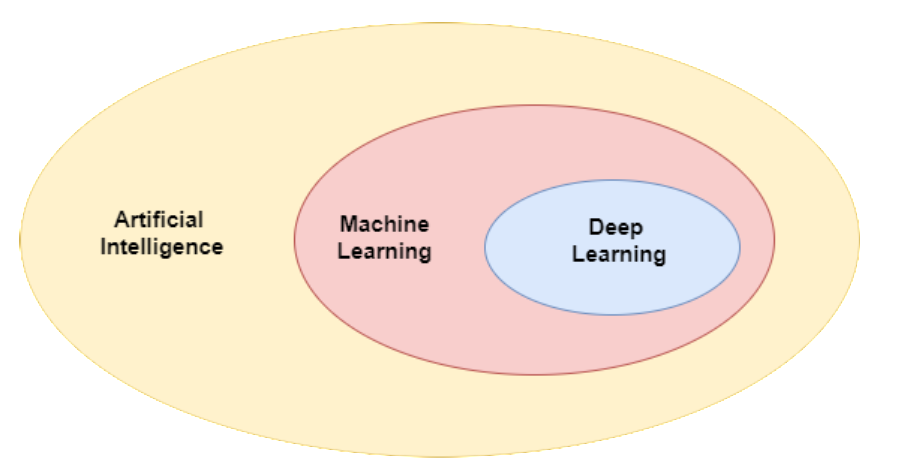
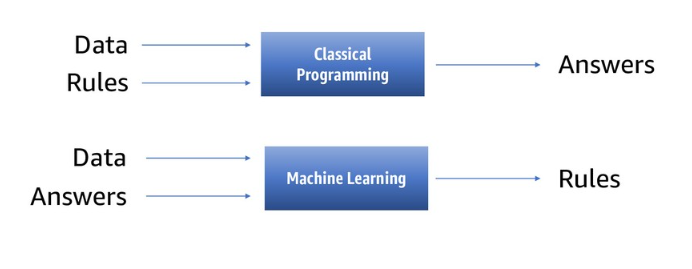
Machine Learning is a subset of AI that allows systems to learn and improve from experience without being explicitly programmed. Instead of being told exactly what to do, ML algorithms use data to find patterns and make decisions.
Types of Machine Learning:
Supervised Learning: The model learns from labeled data. Example: predicting house prices based on historical data.
Unsupervised Learning: The model identifies patterns in unlabeled data. Example: grouping customers based on purchasing behavior.
Reinforcement Learning: The model learns through trial and error, receiving rewards or penalties. Used in robotics and game playing.
AI vs Machine Learning: What’s the Difference?
While AI is the broader concept of machines being able to carry out tasks intelligently, ML is a specific approach to achieving AI by letting machines learn from data. In simple terms:
AI is the goal.
ML is the method used to reach that goal.
Eq : 1. Linear Regression Equation (Supervised Learning)

Why Are AI and ML Important?
AI and ML are not just buzzwords—they have real-world implications across many fields:
Healthcare: Diagnosing diseases, drug discovery, and personalized treatment plans.
Finance: Fraud detection, algorithmic trading, and credit scoring.
Retail: Inventory management, customer personalization, and demand forecasting.
Transportation: Autonomous vehicles, route optimization, and traffic prediction.
Education: Intelligent tutoring systems, adaptive learning, and grading automation.
These technologies increase efficiency, reduce costs, and often enhance decision-making.
Key Concepts for Beginners
To understand AI and ML, beginners should get familiar with several foundational concepts:
Data: ML relies on data. The more relevant and high-quality data you have, the better the model can learn.
Algorithms: A set of rules that the machine follows to analyze data and learn patterns.
Model: The outcome of training an algorithm on data. A model can then make predictions or decisions.
Training and Testing: Data is usually divided into training sets (to teach the model) and testing sets (to evaluate accuracy).
Features and Labels: In supervised learning, features are the input data (like size of a house), and labels are the output (like price).
Common Tools and Languages
Several programming languages and tools are commonly used in AI/ML:
Python: The most popular language for ML due to its simplicity and robust libraries.
R: Used mainly for statistical analysis and data visualization.
Libraries: TensorFlow, Keras, Scikit-learn, and PyTorch are widely used to build ML models.
Myths and Misconceptions
Many myths surround AI and ML, which can deter beginners. Here are a few debunked:
AI will take all jobs: While AI automates some tasks, it also creates new roles in data science, ethics, and AI management.
You need to be a math genius: A basic understanding of statistics, algebra, and logic is helpful, but you don’t need to be a PhD to get started.
AI is conscious or alive: AI does not possess self-awareness or emotions; it simulates certain types of intelligence through algorithms.
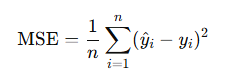
Eq : 2. Loss Function – Mean Squared Error (MSE)
Getting Started: Learning Path for Beginners
Starting with AI and ML is more accessible than ever, thanks to online resources and community support.
Step 1: Learn the Basics of Python
Python is beginner-friendly and widely used in the AI/ML community.
Step 2: Understand Basic Math
Focus on linear algebra, probability, and statistics.
Step 3: Take Introductory Courses
Platforms like Coursera, edX, Udacity, and YouTube offer excellent beginner courses.
Step 4: Practice with Projects
Build small projects like spam detectors, movie recommendation systems, or image classifiers.
Step 5: Join a Community
Platforms like Kaggle, Reddit’s r/MachineLearning, and AI conferences help in networking and learning from others.
Ethical Considerations
AI’s growing influence comes with significant ethical concerns:
Bias in Algorithms: If training data is biased, the model will produce biased results.
Privacy: AI can be used for surveillance or to manipulate behavior.
Job Displacement: Automation may reduce demand for certain jobs, calling for reskilling programs.
Ethical AI development emphasizes transparency, fairness, and accountability.
The Future of AI and ML
AI and ML will continue to evolve and integrate more deeply into our lives. Developments like explainable AI (XAI), federated learning, and AI safety research are shaping the future. As quantum computing, brain-inspired computing, and 5G emerge, the potential applications of AI will expand even further.
But with great power comes great responsibility. As creators and users of AI, we must ensure these technologies benefit humanity at large.
Conclusion
AI and Machine Learning are not as mysterious as they first appear. At their core, they involve using data and algorithms to mimic certain aspects of human intelligence. While the journey into AI/ML may seem daunting, the field is welcoming to beginners, especially those willing to learn, experiment, and think critically.
Whether you're a student, a professional from another field, or simply curious, now is the perfect time to start learning about these transformative technologies. As we move toward an increasingly data-driven future, understanding AI and ML is not just useful—it’s essential.
Comments
Join the discussionNo comments yet. Be the first to comment.