Intelligent Real-Time Streaming Analytics Using Autonomous AI Frameworks

Abstract
The rapid growth of connected devices, cloud applications, digital platforms, and Internet of Things (IoT) technologies has resulted in an unprecedented generation of real-time data. Organizations increasingly require the ability to process and interpret this continuously arriving information to support rapid decision-making. Traditional analytics approaches often depend on predefined rules, static models, and human intervention, making them less effective when data patterns change dynamically. Autonomous Artificial Intelligence (AI) frameworks provide a new approach by enabling streaming analytics systems to continuously monitor data, identify patterns, make predictions, and initiate appropriate actions with limited human intervention. This article examines intelligent real-time streaming analytics using autonomous AI frameworks, including their architecture, major components, applications, advantages, challenges, and future potential.
Introduction
Real-time data has become an essential component of modern digital systems. Financial transactions, sensor readings, customer interactions, network events, online purchases, healthcare devices, transportation systems, and industrial equipment can generate data continuously. Unlike traditional batch processing, real-time streaming analytics focuses on analyzing data as it is produced rather than waiting for information to accumulate.
The increasing complexity and volume of streaming data create significant challenges for organizations. A conventional analytics system may require analysts or engineers to define rules, monitor dashboards, investigate anomalies, and determine appropriate responses. Such approaches can introduce delays and may not scale effectively when thousands or millions of events are generated every second.
Autonomous AI frameworks address this limitation by combining real-time data processing with intelligent decision-making. These systems can observe incoming data, interpret its context, detect unusual behavior, predict future conditions, and initiate actions automatically. This transforms streaming analytics from a passive reporting mechanism into an intelligent and adaptive decision-support system.
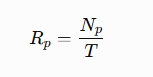
EQ1:Real-Time Data Processing Rate
Architecture of Intelligent Streaming Analytics
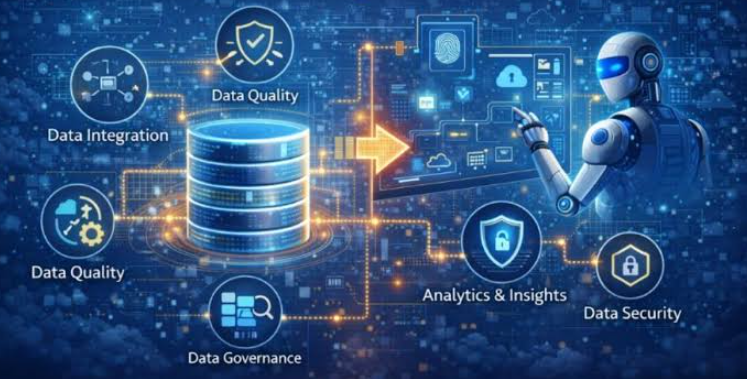
An autonomous real-time streaming analytics architecture typically consists of several interconnected layers. The first layer is the data acquisition layer, which collects continuous information from multiple sources. These sources may include IoT sensors, enterprise applications, web platforms, mobile devices, databases, network systems, and external data services.
The collected data is transferred to a streaming infrastructure capable of handling high-volume event flows. The streaming layer manages event ingestion, buffering, routing, and delivery. It must provide scalability and reliability because the volume and speed of incoming data can change significantly over time.
The next layer performs real-time processing. It filters irrelevant events, transforms raw information, aggregates related events, and prepares the data for AI-based analysis. Low-latency processing is particularly important in applications where decisions must be made within seconds or milliseconds.
The AI intelligence layer analyzes the processed stream. Machine learning and generative AI techniques can identify patterns, classify events, detect anomalies, generate predictions, and provide contextual explanations. An autonomous orchestration layer can then determine what action should be taken based on the AI output.
Autonomous AI Decision-Making
The primary characteristic of an autonomous AI framework is its ability to operate with limited human intervention. Instead of simply displaying an alert, an autonomous system can interpret an event and determine an appropriate response.
For example, in a cybersecurity environment, the system may detect unusual network activity, assess the severity of the behavior, identify potentially compromised resources, and initiate predefined protective actions. Similarly, in industrial environments, AI can monitor equipment data, recognize early indications of failure, and trigger maintenance procedures.
Autonomous decision-making generally involves observation, analysis, reasoning, action, and feedback. The system continuously observes streaming data, analyzes the current situation, selects an appropriate response, executes the action, and evaluates the resulting outcome. This feedback enables the system to become more adaptive over time.
Real-Time Anomaly Detection
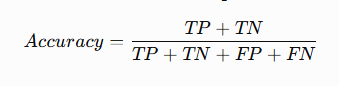
Anomaly detection is one of the most important applications of autonomous streaming analytics. Traditional monitoring systems often depend on static thresholds. However, real-world data frequently changes according to time, location, user behavior, or operating conditions.
AI-based anomaly detection can learn normal patterns from historical and streaming data. When incoming information significantly differs from expected behavior, the system can generate an alert or initiate an automated response.
For example, an e-commerce platform may observe unusual transaction behavior that could indicate fraud. Instead of waiting for a manual investigation, an autonomous AI system can evaluate transaction characteristics in real time and determine whether additional verification or temporary restrictions are necessary.
EQ2:Anomaly Detection Accuracy
Predictive and Prescriptive Analytics
Real-time analytics becomes more valuable when it moves beyond identifying what is happening and predicts what may happen next. AI models can analyze streaming information to forecast demand, equipment failures, customer behavior, network congestion, or operational risks.
Prescriptive analytics extends this capability by recommending or executing actions based on predictions. For example, if an intelligent system predicts increased demand for a product, it may recommend inventory adjustments or automatically initiate appropriate supply-chain processes.
This combination of prediction and autonomous action can significantly improve operational responsiveness.
Applications
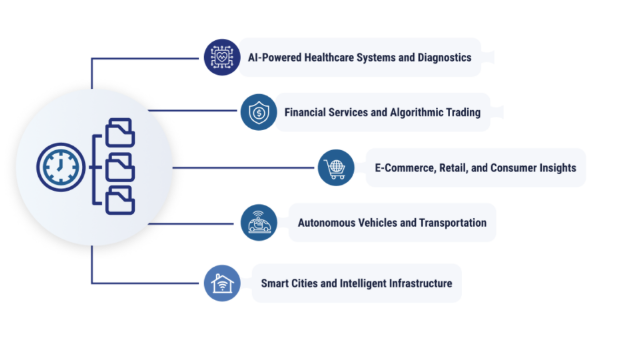
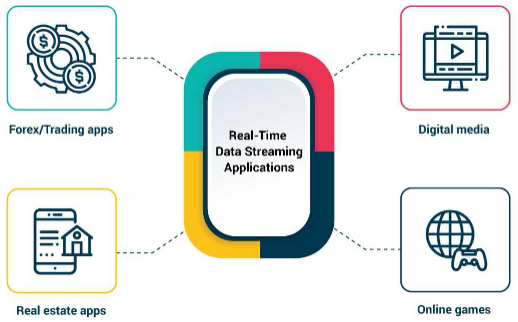
Autonomous real-time streaming analytics has applications across numerous industries. In finance, it can support fraud detection, transaction monitoring, risk assessment, and automated compliance processes. In healthcare, streaming data from medical devices can be analyzed to identify abnormal patient conditions and support timely intervention.
Manufacturing organizations can use AI to monitor equipment, detect production anomalies, and support predictive maintenance. In transportation, autonomous analytics can process traffic information, vehicle telemetry, and environmental data to optimize routes and detect potential hazards.
Retail organizations can analyze customer interactions and transactions to personalize recommendations, manage inventory, and detect fraudulent activity. Telecommunications companies can monitor network performance and automatically identify service degradation or infrastructure problems.
Benefits
One of the major benefits of autonomous streaming analytics is reduced response time. Decisions can be made while events are occurring rather than after data has been stored and manually analyzed.
Another benefit is scalability. AI-driven systems can process large and continuously changing data streams without requiring proportional increases in human monitoring. Automation can also reduce operational costs by minimizing repetitive analytical tasks.
Autonomous systems can further improve consistency because predefined decision policies and AI models can be applied systematically. When combined with human oversight, these systems can help analysts focus on complex decisions rather than routine monitoring.
Challenges and Risks
Despite its advantages, autonomous AI introduces several challenges. Data quality is a fundamental concern because incorrect, incomplete, or biased input can produce unreliable decisions. Streaming systems must therefore include mechanisms for validating and monitoring incoming data.
Model drift is another challenge. Data patterns can change over time, causing AI models that previously performed well to become less accurate. Continuous monitoring and model updating are therefore necessary.
Security and privacy are also critical. Real-time systems may process sensitive information, requiring strong access controls, encryption, data governance, and privacy-preserving practices.
Furthermore, autonomous decisions must be explainable and auditable, particularly in high-impact domains such as finance, healthcare, and security. Organizations should establish human-override mechanisms and clearly define which decisions can be automated.
Future Outlook
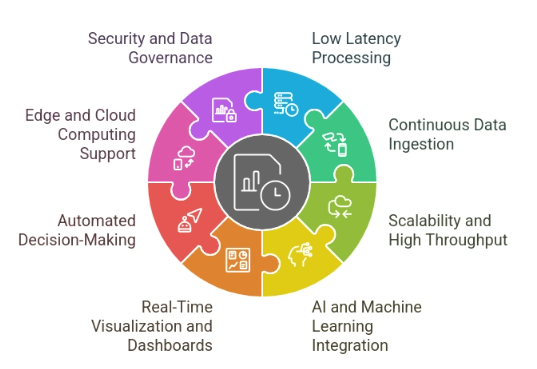
The future of intelligent streaming analytics is likely to involve increasingly autonomous AI agents capable of coordinating multiple analytical and operational tasks. Instead of relying on a single model, organizations may use networks of specialized AI agents that collaborate to detect events, investigate causes, predict outcomes, and execute responses.
Edge AI will also become increasingly important. Processing information closer to its source can reduce latency and bandwidth requirements, particularly for IoT and industrial applications. Integration with cloud platforms will allow organizations to combine local real-time intelligence with large-scale centralized analytics.
As AI technologies become more capable, responsible autonomy will remain essential. Future frameworks will need to balance automation with transparency, security, human supervision, and regulatory compliance.
Conclusion
Intelligent real-time streaming analytics using autonomous AI frameworks represents an important evolution in modern data processing. By combining continuous data streams with machine learning, AI reasoning, automated orchestration, and feedback mechanisms, organizations can move from traditional monitoring toward proactive and autonomous decision-making.
These systems can detect anomalies, predict future events, recommend actions, and respond to changing conditions with minimal delay. However, successful implementation requires careful attention to data quality, model reliability, cybersecurity, privacy, explainability, and human oversight.
Ultimately, autonomous AI can transform real-time streaming analytics into a continuously learning and responsive intelligence layer. When implemented responsibly, it can help organizations improve operational efficiency, reduce risks, respond faster to emerging events, and make better decisions in increasingly dynamic digital environments.
Comments
Join the discussionNo comments yet. Be the first to comment.