Machine Learning in Cybersecurity: Detecting Threats Proactively

Introduction
In today’s digital era, cybersecurity has become one of the most critical concerns for individuals, organizations, and governments. With the increasing sophistication of cyberattacks, traditional security mechanisms such as firewalls, signature-based detection, and manual monitoring are no longer sufficient. Threat actors are constantly evolving their tactics, making it necessary for cybersecurity solutions to be adaptive, intelligent, and proactive.
This is where Machine Learning (ML) plays a transformative role. Machine learning enables systems to learn from historical data, detect anomalies, and predict potential threats before they cause significant damage. Instead of waiting for known attack patterns, ML models analyze vast amounts of data in real-time to identify subtle indicators of compromise. This article explores how machine learning is used in cybersecurity to detect threats proactively, its applications, challenges, and future directions.
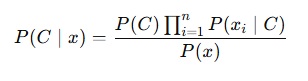
EQ1:Naïve Bayes for Malware Detection
The Need for Machine Learning in Cybersecurity
Traditional cybersecurity approaches are primarily reactive—they detect and respond to threats after they occur. For example, signature-based antivirus software can only detect malware that matches known patterns. However, cybercriminals continuously modify malware signatures, employ zero-day exploits, and use advanced persistent threats (APTs) that bypass conventional defenses.
Machine learning addresses these limitations by:
Learning from large volumes of historical attack data.
Detecting new or unseen attacks by recognizing unusual patterns.
Automating detection processes to reduce dependency on human analysts.
Operating in real-time for faster incident response.
By shifting the focus from reaction to proactive defense, ML provides organizations with a significant advantage against evolving cyber threats.
Applications of Machine Learning in Cybersecurity
1. Intrusion Detection and Prevention Systems (IDPS)
Machine learning enhances intrusion detection by identifying unusual patterns in network traffic that deviate from normal behavior. Instead of relying only on known attack signatures, ML-based IDPS can recognize anomalies such as abnormal login attempts, unusual data transfers, or suspicious communication patterns. This allows organizations to block threats early in the attack cycle.
2. Malware Detection and Classification
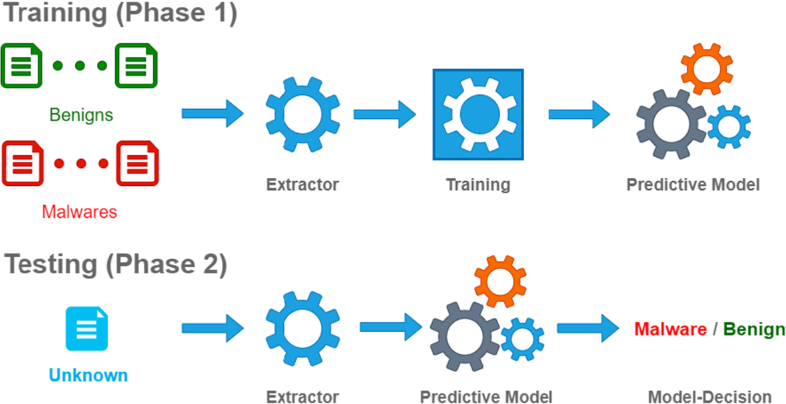
Malware is one of the most prevalent cyber threats. Traditional antivirus tools often fail to detect polymorphic or zero-day malware. ML models, however, analyze features of files, code structures, and execution behavior to classify whether a program is malicious. By examining system calls, runtime behavior, and even subtle obfuscation techniques, machine learning can detect malware variants that were previously unknown.
3. Phishing Detection
Phishing attacks exploit human vulnerability through deceptive emails, websites, or messages. Machine learning models help detect phishing attempts by analyzing:
URL patterns and domain characteristics.
Linguistic features of emails or messages.
User behavior anomalies.
For instance, ML systems can flag suspicious emails by recognizing unusual word choices, sender addresses, or embedded links, protecting users before they click.
4. User and Entity Behavior Analytics (UEBA)
ML-based behavioral analysis is crucial for detecting insider threats and compromised accounts. These systems establish a baseline of normal user behavior, including login times, resource access, and data usage patterns. Deviations, such as accessing sensitive files at unusual hours or downloading excessive data, can trigger alerts. Unlike static rules, ML continuously adapts to evolving user behaviors.
5. Threat Intelligence and Prediction
Machine learning enables organizations to analyze global threat data, including indicators of compromise (IoCs), malware signatures, and attack trends. Predictive models can forecast potential attack vectors and highlight emerging risks. This helps security teams proactively strengthen defenses against likely threats before they manifest.
6. Network Traffic Analysis
ML algorithms analyze network traffic flows to detect distributed denial-of-service (DDoS) attacks, botnet activity, and suspicious communications between devices. By learning what “normal” network behavior looks like, ML can identify anomalies such as unusual packet sizes, connection frequencies, or irregular communication endpoints.
7. Fraud Detection
In industries like finance and e-commerce, fraud detection is a critical application of ML in cybersecurity. Algorithms monitor transaction data in real-time, spotting unusual spending patterns or account activities. For example, a sudden purchase from an unusual location may be flagged as fraudulent. These systems significantly reduce financial losses while maintaining user trust.
8. Endpoint Security
ML strengthens endpoint security by detecting suspicious activity directly on user devices. Instead of relying solely on signature updates, ML-based endpoint solutions analyze process behavior, file changes, and device activities in real time, offering protection against advanced malware and ransomware attacks.

Advantages of Machine Learning in Cybersecurity
Proactive Defense: Detects threats before they cause damage.
Adaptability: Learns and evolves as new threats emerge.
Scalability: Capable of analyzing vast amounts of network, device, and user data.
Automation: Reduces manual monitoring and enhances security team efficiency.
Real-Time Detection: Identifies threats instantly, minimizing potential impact.
Challenges in Applying Machine Learning to Cybersecurity
While ML offers immense potential, it also faces several challenges:
1. Data Quality and Availability
Machine learning requires large, high-quality datasets for training. In cybersecurity, collecting representative datasets is difficult due to privacy concerns, proprietary data, and the rapid evolution of threats. Incomplete or biased datasets can reduce detection accuracy.
2. False Positives and False Negatives
Excessive false positives can overwhelm security teams, while false negatives may let actual threats slip through undetected. Striking the right balance is one of the toughest challenges in deploying ML systems.
3. Adversarial Attacks on ML Models
Cybercriminals are also leveraging ML techniques to trick security systems. Adversarial attacks involve manipulating inputs (e.g., slightly altering malware code) to evade detection. ML models must be robust against such manipulations.
4. Computational Costs
Training and deploying ML models require significant computational resources, which may not be feasible for all organizations, especially small and medium-sized enterprises.
5. Dynamic Nature of Cyber Threats
Threat actors constantly evolve their techniques. An ML model trained on historical threats may become obsolete unless continuously updated. This need for frequent retraining increases operational complexity.
6. Explainability and Trust
Many ML models, especially deep learning, function as “black boxes,” making it difficult for security analysts to understand why a particular decision was made. Lack of explainability can reduce trust in automated systems.
EQ2:Anomaly Detection in Network Traffic

Future Directions
1. Integration with Artificial Intelligence (AI)
Combining ML with broader AI approaches, such as natural language processing and reinforcement learning, will create more adaptive and intelligent cybersecurity systems.
2. Explainable Machine Learning (XML)
Research into explainable ML aims to make models more transparent, enabling security teams to understand and validate detection decisions.
3. Federated Learning for Privacy-Preserving Security
Federated learning allows ML models to train across decentralized data sources without sharing raw data. This is especially useful in cybersecurity, where data privacy is a critical concern.
4. Hybrid Security Models
Future solutions will combine ML with traditional rule-based approaches, offering a layered defense strategy. This ensures better accuracy and robustness.
5. Autonomous Security Systems
Advances in ML are moving toward fully autonomous cybersecurity systems that can detect, analyze, and respond to threats in real time with minimal human intervention.
Conclusion
Machine learning has emerged as a game-changer in cybersecurity, shifting defense strategies from reactive to proactive. By leveraging ML, organizations can detect malware, phishing, insider threats, fraud, and anomalies before they escalate into full-scale attacks. While challenges such as data availability, adversarial threats, and model explainability persist, the potential benefits far outweigh the limitations.
As cyber threats continue to grow in complexity and scale, the integration of machine learning into cybersecurity will be essential. With ongoing advancements, ML-driven systems will not only strengthen digital defenses but also enable a future where threats are predicted and neutralized before they cause harm.
Comments
Join the discussionNo comments yet. Be the first to comment.