Optimizing Predictive Analytics through Machine Learning Algorithms
Introduction
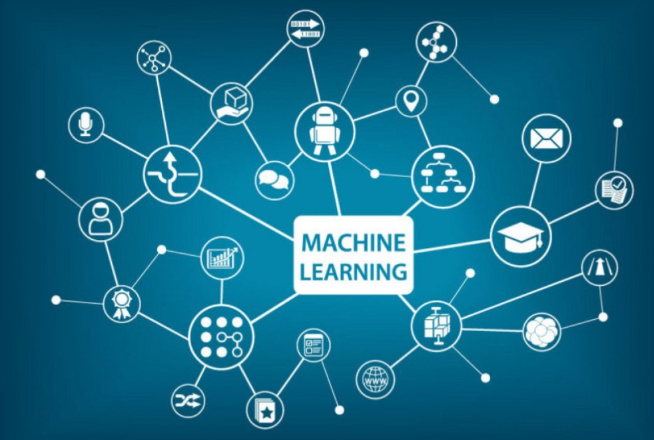
Predictive analytics has become a cornerstone of modern decision-making in industries ranging from healthcare to finance, retail, and transportation. It involves using historical and current data to forecast future outcomes, enabling organizations to anticipate trends, mitigate risks, and identify opportunities. The advent of machine learning (ML) has elevated predictive analytics by introducing models that can learn patterns from large datasets, adapt to changes, and deliver more accurate forecasts. This article explores how machine learning algorithms optimize predictive analytics, the challenges faced, and the opportunities they create for organizations.
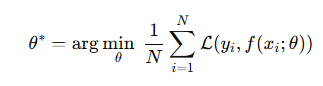
EQ1:Loss Function for Optimization
Understanding Predictive Analytics
Predictive analytics focuses on anticipating outcomes based on existing information. Traditional statistical methods often relied on linear regression, time-series models, and other techniques requiring assumptions about data distribution. While effective in certain cases, these methods struggle with complex, high-dimensional, and unstructured datasets.
Machine learning offers a more dynamic approach by building models that learn patterns automatically, without needing explicit assumptions. As organizations collect massive volumes of data from diverse sources such as sensors, social media, customer interactions, and financial records, machine learning becomes critical to turning this raw data into actionable predictions.
Role of Machine Learning in Predictive Analytics
Machine learning enhances predictive analytics by:
Handling Large and Complex Datasets
Algorithms can process millions of variables, capturing subtle correlations that humans or traditional models might miss.Automating Feature Extraction
Advanced techniques such as deep learning automatically extract relevant features from raw data, reducing the need for manual engineering.Improving Accuracy
By continuously learning from new data, ML algorithms refine predictions, often outperforming traditional methods.Supporting Real-Time Forecasts
Machine learning models can process streaming data, enabling applications like fraud detection or dynamic pricing in near real-time.
Key Machine Learning Algorithms for Predictive Analytics
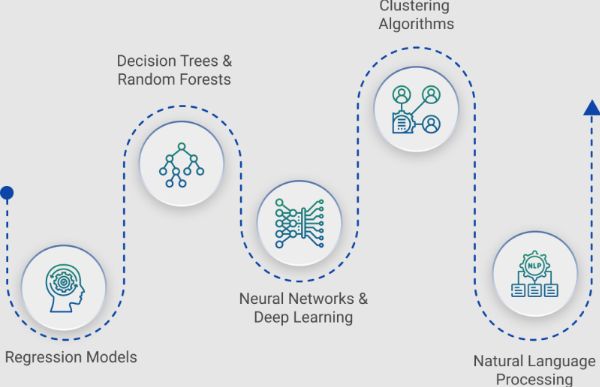
Different algorithms optimize predictive analytics in unique ways. Some of the most widely used include:
1. Linear and Logistic Regression
Although among the simplest techniques, these remain foundational. Linear regression predicts continuous values such as sales forecasts, while logistic regression handles classification problems such as churn prediction.
2. Decision Trees and Random Forests
Decision trees break down data into decision rules, offering interpretability. Random forests, which combine many trees, provide greater accuracy and reduce overfitting. These are commonly used in credit scoring and risk assessment.
3. Support Vector Machines (SVMs)
SVMs are powerful for classification, especially in high-dimensional spaces. They are widely applied in areas like text classification, image recognition, and medical diagnostics.
4. Neural Networks and Deep Learning
Neural networks excel at capturing nonlinear relationships in data. Deep learning, a subset of neural networks with multiple layers, can analyze unstructured data such as images, speech, and text. For predictive analytics, deep learning powers applications like demand forecasting and natural language processing.
5. Gradient Boosting Machines (GBMs)
Boosting techniques such as XGBoost, LightGBM, and CatBoost build models iteratively to minimize prediction errors. They dominate many predictive modeling competitions due to their high accuracy and ability to handle heterogeneous datasets.
6. Clustering Algorithms
Though often unsupervised, clustering techniques like k-means can enhance predictive analytics by grouping customers, behaviors, or events before building supervised models.
Applications Across Industries
Healthcare
Machine learning-driven predictive analytics supports early disease detection, personalized treatment plans, and hospital resource allocation. For example, predictive models help forecast patient readmission risks, enabling preventive care strategies.
Finance
Banks and financial institutions leverage ML to predict loan defaults, detect fraudulent transactions, and anticipate market movements. Predictive models help in optimizing investment portfolios and risk management.
Retail and E-commerce
Retailers use predictive analytics to forecast demand, optimize pricing strategies, and personalize product recommendations. This drives customer satisfaction while reducing costs through efficient inventory management.
Transportation and Logistics
Machine learning predicts traffic congestion, vehicle maintenance needs, and delivery times. Logistics firms optimize supply chains and enhance efficiency by anticipating disruptions.
Human Resources
Predictive analytics supports talent acquisition by forecasting candidate success and employee retention, improving workforce planning.
Optimizing Predictive Analytics with ML Techniques
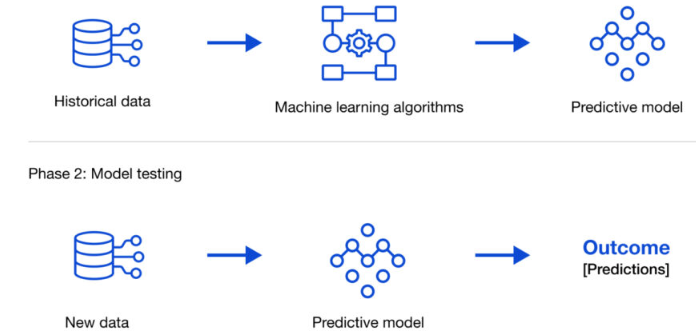
The effectiveness of predictive analytics depends on how well machine learning models are optimized. Key strategies include:
Feature Engineering
Selecting or creating relevant features significantly influences predictive accuracy. Advanced ML tools and domain knowledge together ensure robust feature sets.Model Selection and Ensemble Methods
No single algorithm suits every problem. Combining multiple models, known as ensembling, often improves predictions by balancing strengths and weaknesses.Hyperparameter Tuning
Optimizing algorithm-specific parameters can greatly enhance performance. Automated methods such as grid search, random search, and Bayesian optimization streamline this process.Cross-Validation
Splitting data into training and validation sets ensures models generalize well to unseen data, avoiding overfitting.Scalability and Real-Time Processing
Predictive analytics increasingly requires real-time insights. Optimizing algorithms for parallelization and distributed computing enhances their efficiency.Explainability and Interpretability
In domains like healthcare and finance, stakeholders require explanations of predictions. Techniques such as SHAP (Shapley Additive Explanations) and LIME (Local Interpretable Model-agnostic Explanations) improve trust and accountability.
Challenges in Optimization
While machine learning enriches predictive analytics, several challenges must be addressed:
Data Quality Issues: Noisy, incomplete, or biased data can mislead algorithms.
Overfitting: Complex models may perform well on training data but poorly on new data.
Ethical Concerns: Predictions can inadvertently reinforce biases, leading to unfair outcomes.
Computational Costs: Training advanced models like deep learning requires significant resources.
Privacy and Security: Handling sensitive data raises compliance and ethical challenges.
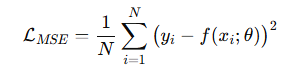
EQ2:Mean Squared Error (Regression Task)
Future Directions
The future of predictive analytics lies in integrating machine learning with other emerging technologies:
Automated Machine Learning (AutoML)
AutoML platforms reduce the complexity of model selection, hyperparameter tuning, and deployment, democratizing predictive analytics for non-experts.Hybrid Models
Combining machine learning with domain-specific models (e.g., physics-informed ML) improves predictions in specialized fields.Federated Learning
By training models on distributed datasets without centralizing data, federated learning ensures privacy while enhancing predictive power.Integration with IoT and Edge Computing
Real-time predictive analytics at the edge enables applications in smart cities, autonomous vehicles, and industrial IoT.Ethical AI Frameworks
Future optimization efforts will prioritize fairness, accountability, and transparency to build trust in predictive systems.
Conclusion
Predictive analytics is rapidly evolving, driven by machine learning algorithms that unlock insights from vast, complex datasets. From linear regression to deep learning, each algorithm contributes unique strengths to prediction tasks. Optimizing predictive analytics involves not only choosing the right algorithm but also refining data quality, engineering features, tuning hyperparameters, and ensuring interpretability.
As industries embrace predictive analytics for strategic decision-making, machine learning will remain central to its optimization. The future promises more automated, ethical, and real-time predictive systems, empowering organizations to anticipate challenges and seize opportunities with greater confidence.
Comments
Join the discussionNo comments yet. Be the first to comment.