Self-Adaptive Cloud Data Platforms Using Generative Policy Intelligence

Introduction
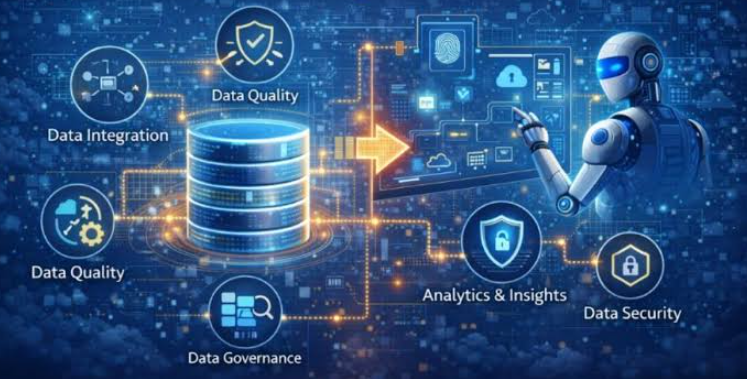
Cloud data platforms are central to modern computing, enabling organizations to store, process, and analyze massive volumes of data. These platforms support applications ranging from real-time analytics to artificial intelligence. However, they operate in environments that are constantly changing—workloads fluctuate, user demands shift, and infrastructure conditions vary. Traditional cloud systems rely on predefined rules and manual configurations, which are often insufficient to handle such dynamic complexity efficiently.
To overcome these limitations, researchers and practitioners are exploring self-adaptive cloud data platforms, enhanced by generative policy intelligence (GPI). This approach combines autonomous system adaptation with generative AI-driven decision-making, allowing platforms to dynamically adjust behavior while adhering to high-level policies and constraints.
Self-Adaptive Cloud Data Platforms
A self-adaptive system can monitor its environment and automatically adjust its operations to maintain desired performance and reliability. In cloud data platforms, this involves a continuous cycle of monitoring, analysis, decision-making, and execution.
Key features of self-adaptive cloud data platforms include:
Dynamic resource management: Automatically scaling compute, storage, and networking resources based on demand. Workload optimization: Distributing tasks efficiently to minimize latency and maximize throughput. Fault tolerance and self-healing: Detecting failures and recovering without human intervention. Data lifecycle management: Adjusting storage tiers, replication, and placement strategies dynamically.
These capabilities allow cloud platforms to maintain service-level objectives (SLOs) while reducing operational overhead. However, most traditional adaptive systems rely on rule-based logic or limited machine learning models, which may not fully capture complex, evolving system behaviors.
Generative Policy Intelligence (GPI)
Generative Policy Intelligence introduces a more flexible and intelligent approach to system control. It leverages generative AI models—such as large language models—to interpret context, generate policies, and guide system behavior dynamically.
Unlike static rule-based systems, GPI enables:
Policy synthesis: Creating new operational rules from high-level objectives (e.g., “minimize cost while maintaining latency below a threshold”). Context-aware reasoning: Understanding relationships between system components and external conditions. Adaptive decision-making: Generating actions that are tailored to current system states. Explainability: Producing human-readable justifications for decisions.
GPI effectively bridges the gap between human intent and system execution, allowing cloud platforms to operate more autonomously while remaining aligned with organizational goals.
EQ.1. Data Placement Optimization:

System Architecture
A self-adaptive cloud data platform with generative policy intelligence typically consists of several interconnected layers:
Monitoring Layer Collects real-time metrics such as resource utilization, query latency, error rates, and data movement patterns. Knowledge Layer Stores historical data, system models, and policy constraints, forming the context for decision-making. Generative Intelligence Layer Uses AI models to analyze system behavior, predict future states, and generate policies or actions. Policy Management Layer Validates and enforces policies, ensuring compliance with constraints like cost limits, security rules, and regulatory requirements. Execution Layer Implements changes, such as scaling resources, reconfiguring pipelines, or redistributing data.
This layered architecture enables continuous adaptation while maintaining control and governance.
Applications and Use Cases a. Intelligent Data Pipelines
Data pipelines often face issues such as schema changes, data quality problems, and workload spikes. GPI-enabled systems can automatically adjust pipeline configurations, reroute data flows, and optimize processing strategies in real time.
b. Multi-Cloud Optimization
Organizations increasingly use multiple cloud providers. Self-adaptive platforms can dynamically decide where to store and process data based on cost, latency, and reliability, while GPI ensures decisions align with business policies.
c. Autonomous Query Optimization
Query performance can vary depending on system conditions. Generative intelligence can analyze query patterns and automatically adjust execution plans, indexing strategies, and caching mechanisms.
d. Governance and Compliance
Policies related to data privacy, security, and regulatory compliance can be complex. GPI allows systems to interpret high-level governance requirements and enforce them dynamically across data workflows.
e. Self-Healing Systems
When failures occur, the system can diagnose issues, generate recovery strategies, and execute them automatically, reducing downtime and improving reliability.
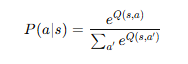
EQ.2. Probabilistic Policy Modeling:
Benefits
The integration of generative policy intelligence into self-adaptive cloud data platforms offers several advantages:
Operational efficiency: Reduces the need for manual intervention and system tuning. Scalability: Handles increasing workloads and data volumes seamlessly. Resilience: Improves fault detection and recovery capabilities. Cost optimization: Dynamically allocates resources to minimize expenses. Policy alignment: Ensures system behavior remains consistent with organizational goals. Flexibility: Adapts to new requirements without extensive reconfiguration.
These benefits make GPI-enabled platforms particularly suitable for complex, data-intensive environments.
Challenges
Despite its promise, this approach presents several challenges:
Trust and reliability: Ensuring that AI-generated policies are correct and safe. Explainability: Providing clear reasoning behind automated decisions. Integration complexity: Incorporating generative AI into existing cloud architectures. Data privacy: Protecting sensitive data while enabling intelligent adaptation. Performance overhead: Managing the computational cost of AI-driven decision-making.
Addressing these challenges is essential for widespread adoption.
Future Directions
Future research is likely to focus on:
Hybrid models combining rule-based systems with generative AI Federated and distributed learning for multi-cloud environments Human-in-the-loop systems for better oversight and trust Standardized frameworks for policy representation and validation Energy-efficient AI models for sustainable cloud operations
These advancements will further enhance the capabilities and practicality of self-adaptive platforms.
Conclusion
Self-adaptive cloud data platforms powered by generative policy intelligence represent a transformative approach to cloud computing. By combining autonomous system adaptation with AI-driven policy generation, these platforms can operate more efficiently, reliably, and intelligently in dynamic environments. While challenges remain, continued innovation in generative AI and cloud technologies is expected to drive the evolution of fully autonomous, policy-aware data platforms in the near future.
Comments
Join the discussionNo comments yet. Be the first to comment.