Self-Evolving Data Engineering Frameworks for Modern Cloud Ecosystems

Introduction
The rapid adoption of cloud computing has transformed how organizations manage, process, and analyze data. Enterprises now generate massive volumes of structured, semi-structured, and unstructured data from business applications, digital services, Internet of Things (IoT) devices, customer interactions, and external information sources. As cloud ecosystems continue to expand, traditional data engineering frameworks have become increasingly inadequate for handling the scale, diversity, and velocity of modern enterprise data. Conventional systems often depend on manually configured pipelines, static workflows, and scheduled maintenance, making them difficult to adapt to rapidly changing business requirements and dynamic cloud environments.
Self-evolving data engineering frameworks represent the next generation of intelligent data management solutions. These frameworks are designed to continuously monitor, evaluate, and improve their own operations without requiring extensive human intervention. By integrating artificial intelligence (AI), machine learning, automation, cloud-native technologies, and intelligent orchestration, self-evolving frameworks enable enterprise data platforms to optimize performance, enhance scalability, improve reliability, and reduce operational complexity. Instead of merely executing predefined tasks, these systems learn from historical operations, adapt to workload variations, and refine data processing strategies over time.
As organizations pursue digital transformation initiatives, self-evolving data engineering frameworks provide the flexibility and intelligence required to support real-time analytics, data-driven decision making, and continuous business innovation.
Evolution of Data Engineering in Cloud Environments
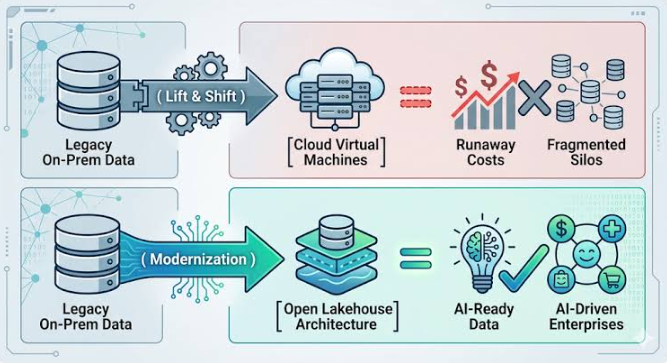
Data engineering has experienced significant transformation alongside advances in cloud computing. Early enterprise data platforms primarily relied on on-premises infrastructure and batch-oriented Extract, Transform, and Load (ETL) processes. While these systems effectively supported reporting and business intelligence, they struggled to accommodate rapidly growing datasets and evolving analytical requirements.
The introduction of distributed computing technologies enabled organizations to process large-scale datasets across multiple computing nodes. Cloud computing further accelerated this evolution by providing elastic infrastructure, scalable storage, and on-demand computational resources. Organizations gained the ability to deploy data pipelines more rapidly while reducing infrastructure management costs.
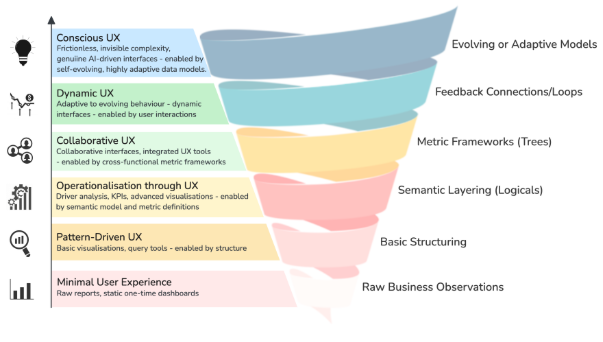
More recently, artificial intelligence has introduced intelligent automation into cloud-based data engineering. Machine learning algorithms now assist in workload prediction, anomaly detection, resource optimization, and metadata management. Self-evolving frameworks extend these capabilities by enabling data engineering platforms to autonomously modify processing workflows, optimize infrastructure utilization, and continuously improve operational performance based on observed system behavior.
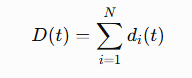
EQ1:Data Ingestion Model
Characteristics of Self-Evolving Data Engineering Frameworks
A self-evolving data engineering framework differs from traditional architectures because it possesses the ability to learn, adapt, and optimize continuously. These frameworks incorporate several essential characteristics that distinguish them from static systems.
Continuous monitoring allows the framework to observe operational metrics such as processing speed, data quality, system utilization, network performance, and storage efficiency. This real-time visibility enables rapid identification of emerging bottlenecks and operational inefficiencies.
Adaptive decision-making mechanisms analyze collected operational data using artificial intelligence models. Based on learned patterns, the framework automatically modifies workflow configurations, scheduling policies, and resource allocations to maintain optimal performance.
Intelligent automation minimizes manual administrative tasks by automating pipeline deployment, schema evolution, metadata generation, infrastructure provisioning, and error recovery. These capabilities significantly reduce operational overhead while improving system reliability.
Scalability is another defining feature. Self-evolving frameworks dynamically expand or reduce computational resources according to workload fluctuations, ensuring efficient utilization of cloud infrastructure while maintaining service quality.
Finally, resilience enables continuous operation despite infrastructure failures, network disruptions, or unexpected workload changes. Automated recovery mechanisms restore failed processes, redistribute workloads, and maintain service availability with minimal disruption.
Architecture of Self-Evolving Frameworks
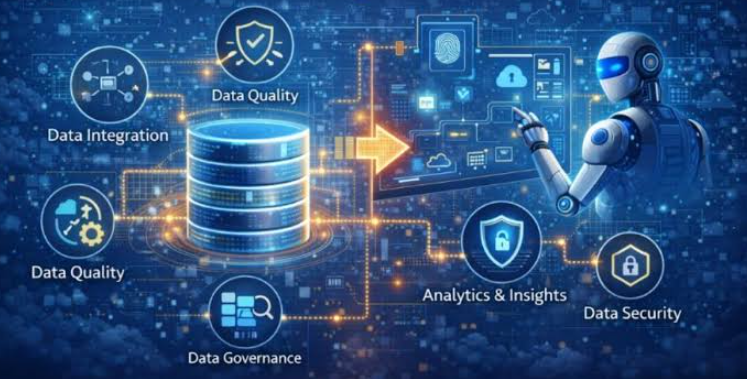
A modern self-evolving data engineering framework consists of multiple interconnected layers that work together to create an intelligent cloud-based ecosystem.
The data ingestion layer collects information from enterprise databases, cloud applications, streaming platforms, IoT devices, APIs, and external data providers. Intelligent connectors automatically adapt to changes in source formats and communication protocols.
The integration layer performs data cleansing, transformation, validation, enrichment, and standardization. AI-assisted transformation engines detect evolving schemas and automatically recommend modifications that preserve data consistency across multiple systems.
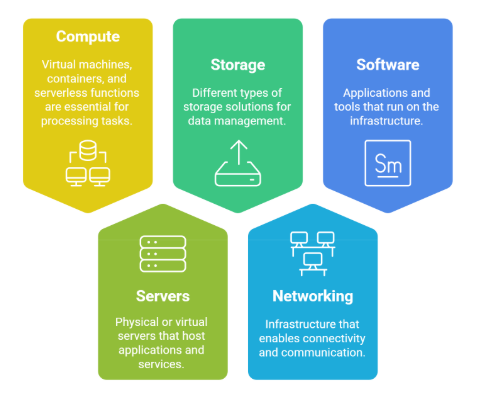
Cloud-native storage services provide elastic repositories capable of supporting structured and unstructured information. Intelligent storage management continuously optimizes data placement, compression, indexing, and replication strategies based on access patterns and performance requirements.
Distributed processing engines execute analytical workflows across scalable computing clusters. AI-driven orchestration systems dynamically balance computational loads, prioritize critical workloads, and allocate cloud resources according to current operational demands.
Metadata management services maintain comprehensive descriptions of datasets, processing history, governance policies, business definitions, and data lineage. Intelligent metadata significantly improves data discovery, governance, and automation.
Analytics platforms transform processed information into actionable insights through dashboards, predictive models, operational intelligence systems, and interactive visualization tools that support strategic decision making.
Artificial Intelligence as the Driving Force
Artificial intelligence serves as the foundation of self-evolving data engineering frameworks. Machine learning models continuously analyze system performance, workload characteristics, and historical operational data to identify opportunities for optimization.
Predictive analytics enables proactive infrastructure management by forecasting future computational demands. Rather than responding reactively to performance degradation, self-evolving frameworks anticipate workload increases and allocate resources before bottlenecks occur.
Anomaly detection algorithms identify abnormal processing behavior, data inconsistencies, security threats, and infrastructure failures in real time. Automated remediation workflows initiate corrective actions without waiting for manual intervention.
Natural language processing enhances metadata generation by automatically documenting datasets, identifying semantic relationships, and improving enterprise data catalogs. Recommendation systems assist engineers by suggesting optimal pipeline configurations, transformation rules, and storage strategies based on accumulated operational knowledge.
As AI models continuously learn from new operational experiences, the framework becomes progressively more intelligent, improving efficiency, accuracy, and reliability throughout its operational lifecycle.
Benefits for Modern Cloud Ecosystems
Self-evolving data engineering frameworks provide numerous advantages for organizations operating within cloud environments.
Operational efficiency improves significantly because automated optimization reduces manual configuration, monitoring, and maintenance activities. Engineering teams can focus on innovation rather than routine administrative tasks.
Scalability becomes more effective through intelligent resource management. Cloud infrastructure automatically expands during peak demand and contracts during periods of reduced activity, minimizing operational costs while maintaining performance.
Data quality improves through continuous validation, automated cleansing, and intelligent anomaly detection. High-quality data directly supports more accurate analytics, machine learning models, and business decision-making.
Real-time responsiveness enables organizations to process continuously arriving information from streaming platforms and IoT systems. Business leaders receive timely insights that facilitate rapid responses to changing market conditions.
Business continuity is strengthened through automated recovery mechanisms capable of detecting failures, redistributing workloads, and restoring interrupted services with minimal downtime.
Furthermore, self-evolving frameworks accelerate digital transformation by enabling enterprises to deploy new analytical services rapidly while maintaining governance, security, and operational consistency across cloud platforms.
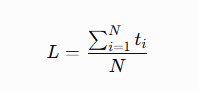
EQ2:Processing Latency
Governance and Security
Effective governance remains essential as enterprise data ecosystems become increasingly autonomous. Self-evolving frameworks integrate governance mechanisms directly into every stage of the data lifecycle.
Automated policy enforcement verifies compliance with organizational standards and regulatory requirements during data ingestion, transformation, storage, and distribution. Data lineage tracking records every processing activity, enhancing transparency and simplifying auditing procedures.
Role-based access control ensures that sensitive information remains accessible only to authorized users. Intelligent identity management continuously evaluates user behavior and detects suspicious access patterns.
Encryption protects enterprise data both during transmission and while stored within cloud environments. AI-enhanced cybersecurity systems continuously monitor infrastructure activity, identifying emerging threats and automatically initiating defensive actions to minimize organizational risk.
By combining intelligent governance with adaptive security mechanisms, self-evolving frameworks establish trustworthy enterprise data environments that support both innovation and regulatory compliance.
Challenges and Future Research
Despite their significant advantages, self-evolving data engineering frameworks present several implementation challenges. Integrating legacy enterprise systems with intelligent cloud-native architectures requires careful planning and substantial technical expertise. Organizations must also ensure interoperability across diverse cloud platforms, data formats, and distributed computing environments.
Artificial intelligence models require continuous validation to ensure reliable decision-making. Issues related to model explainability, fairness, transparency, and ethical AI deployment remain active areas of research. Balancing automation with appropriate human oversight is essential for maintaining trust in autonomous operational decisions.
Future research will focus on developing highly autonomous frameworks capable of self-configuring, self-healing, self-securing, and self-optimizing without human intervention. Emerging technologies such as generative AI, digital twins, knowledge graphs, federated learning, edge computing, and autonomous cloud orchestration are expected to significantly enhance the intelligence and adaptability of future data engineering platforms.
Additionally, sustainability will become an increasingly important research objective as intelligent frameworks optimize energy consumption, infrastructure utilization, and environmental impact while maintaining high analytical performance.
Conclusion
Self-evolving data engineering frameworks represent a major advancement in the evolution of modern cloud ecosystems. By combining artificial intelligence, cloud-native infrastructure, intelligent automation, and continuous learning, these frameworks enable enterprise data platforms to adapt dynamically to changing operational conditions. Their ability to optimize workflows, improve resource utilization, enhance data quality, strengthen governance, and support real-time analytics provides organizations with a powerful foundation for digital transformation. Although challenges related to integration, governance, explainability, and security remain, ongoing advances in AI and cloud technologies continue to improve the capabilities of self-evolving systems. As enterprises increasingly depend on intelligent data platforms to support innovation and competitive advantage, self-evolving data engineering frameworks will become essential components of next-generation cloud ecosystems, delivering scalable, resilient, and autonomous data management solutions for the future.
Comments
Join the discussionNo comments yet. Be the first to comment.